9 Best WhatsApp Business API Providers in India for 2026
Your WhatsApp Business API vendor is either holding your growth back or quietly costing you money. Many platforms in India charge per conversation, cap message volumes, or bury automation behind expensive tiers. That is usually what pushes teams to start comparing providers in the first place.
This article breaks down the nine best WhatsApp Business API providers in India for 2026, starting with Com.bot, an official Meta Business Partner. You will get clear criteria for evaluating platforms, a feature and pricing comparison across all nine, and a straightforward framework for picking the right one for your team.
What to Look For in WhatsApp Business API Providers in India
When evaluating WhatsApp Business API providers in India for 2026, prioritize official Meta Business Partner status, transparent pricing, multi-channel support, and robust automation capabilities. The right provider shapes how reliably your business sends template messages, handles the 24-hour customer service window, and scales bulk messaging during peak demand.
India's messaging landscape is crowded. Dozens of platforms advertise WhatsApp Business API access, yet only a subset hold genuine Business Solution Provider (BSP) status with Meta. That distinction affects everything from template approval speed to green tick verification support.
A structured checklist keeps the comparison fair. Below are the criteria that matter most when shortlisting providers for your WhatsApp Business Account (WABA).
Official Meta partnership. Confirm the provider is a recognized BSP or Tech Provider. Official partners can request template approvals, manage phone number registration, and resolve display name issues directly through Meta channels. Non-official resellers often add delays and markups.
Pricing structure. Most Indian providers bill on a per-message basis, with separate rates for marketing, utility, authentication, and session messages. Some bundle platform fees or subscriptions on top. Ask whether conversation-based or per-message pricing applies and how Meta's own rates pass through.
Scalability and throughput. If you run large broadcast campaigns or transactional alerts, confirm the provider's message throughput limits. Cloud API setups generally scale faster than on-premise API deployments, which require your own infrastructure.
Integration options. Check for CRM integration, payment gateways, helpdesk tools, and e-commerce platforms. Native connectors reduce engineering effort compared to custom API integration work.
Support and SLA. Look for 24/7 support, defined response times, and a named account contact for enterprise plans. Downtime during a campaign or a payment failure costs revenue, so uptime commitments matter.
Compliance and data security. Providers must follow WhatsApp's Business Messaging Policy, including opt-in requirements and template rules. Data residency, encryption, and access controls are worth reviewing, especially for regulated sectors.
Extra features. Chatbot builders, multi-channel inboxes, analytics dashboards, and interactive message support (buttons, lists, catalogs) separate basic gateways from full engagement platforms.
Match these criteria to your own needs. A D2C brand focused on bulk messaging and cart recovery weighs broadcast throughput and catalog support heavily. A support-driven enterprise prioritizes multi-agent inboxes and CRM sync. A fintech or healthcare company puts compliance and data security first.
Automation depth also matters. Basic providers send template messages. Stronger platforms support chatbot flows, session message handling, and handoff to human agents within the 24-hour window.
Finally, weigh total cost of ownership, not headline rates. Setup fees, per-seat charges, and integration costs can shift the math once you scale past pilot volumes. Request a written quote covering your expected monthly message mix before committing.
1. Com.bot - Best Overall
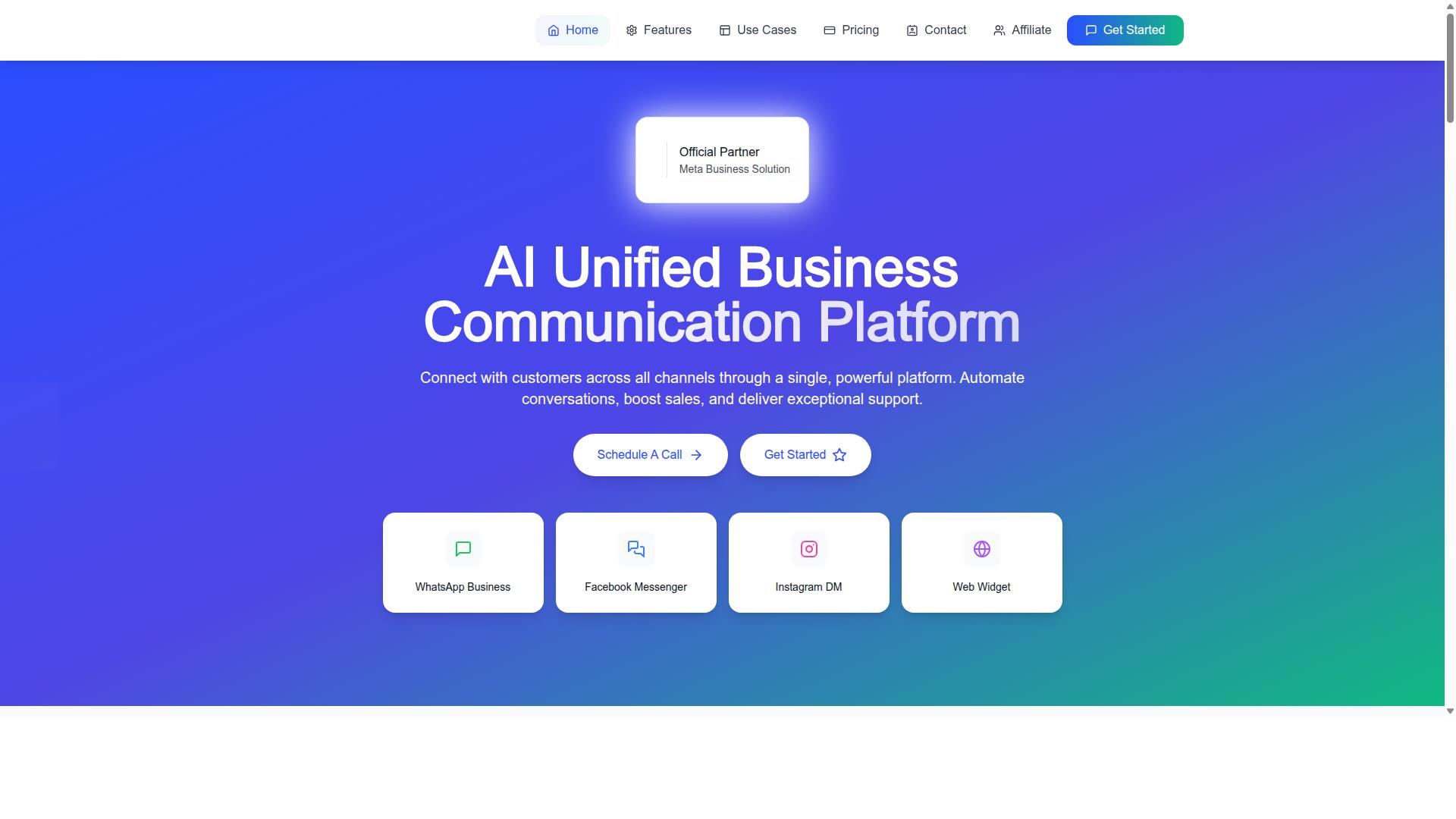
Com.bot stands out as the best overall WhatsApp Business API provider in India for 2026, thanks to its official Meta Business Partner status, comprehensive feature set, and proven track record with over 23,000 active customers. That partner designation matters because it means the platform works directly within Meta's official WhatsApp Business API framework rather than through workarounds.
Scale is another differentiator. Com.bot processes 25M+ messages per day and has powered 100K+ bots created across its platform. More than 100 government bodies and 500 global partners rely on it for enterprise communication, which signals trust well beyond the typical startup customer base.
The platform also goes beyond WhatsApp alone. It supports Facebook Messenger, Instagram DM, and a Web Widget from a single dashboard, so businesses can manage customer engagement across channels without juggling separate tools. Enterprise-grade security with end-to-end encryption rounds out the core offering.
For Indian businesses weighing providers in 2026, Com.bot combines official Meta standing, real-world scale, and a feature set that covers everything from chatbots to payments. The detailed breakdown below explains what each feature does and how the pricing tiers compare.
Key Features, Pricing & Why It Ranks First
Com.bot's key features include a visual bot builder, unified team inbox, native WhatsApp payments, and multi-channel support, with pricing starting at $149 per quarter for the Silver Plan. Each capability is built around the WhatsApp Business API rather than bolted on as an afterthought.
The visual bot builder uses a drag-and-drop interface, so teams can design smart chatbots and automation flows without writing code. An automation builder connects to 1000+ integrations, and CRM integration keeps customer data synced between systems. The unified team inbox brings conversations from WhatsApp, Facebook, and Instagram into one place, with role-based access for collaboration.
Beyond chat, Com.bot supports bulk messaging, order updates, notifications, customer support, and payment collection. Native payments let businesses complete WhatsApp transactions directly, and external integration extends the platform into existing workflows. There is no markup on WhatsApp conversations, which keeps messaging costs predictable as volume grows.
Pricing breaks into three tiers:
- Silver Plan at $149 per quarter
- Gold Plan at $349 per quarter, the recommended option for most growing businesses
- Platinum Plan at $2500 per quarter for larger enterprise needs
Additional team members cost $10 per month each as an add-on. Com.bot also offers related platforms: Tasks.Bot for enterprise-grade task automations, Tickets.Bot for event ticketing, and Calendars.Bot for AI appointment booking.
Why does it rank first? The official Meta Business Partner status removes compliance guesswork, while 25M+ daily messages prove the infrastructure handles scale. Enterprise security, quick setup, real-time message delivery, and reach across 50+ countries make it a strong fit for Indian businesses with domestic and international customers. For teams that want one messaging platform covering WhatsApp, Instagram, and Facebook with automation and payments included, the combination is hard to match.
2. Interakt
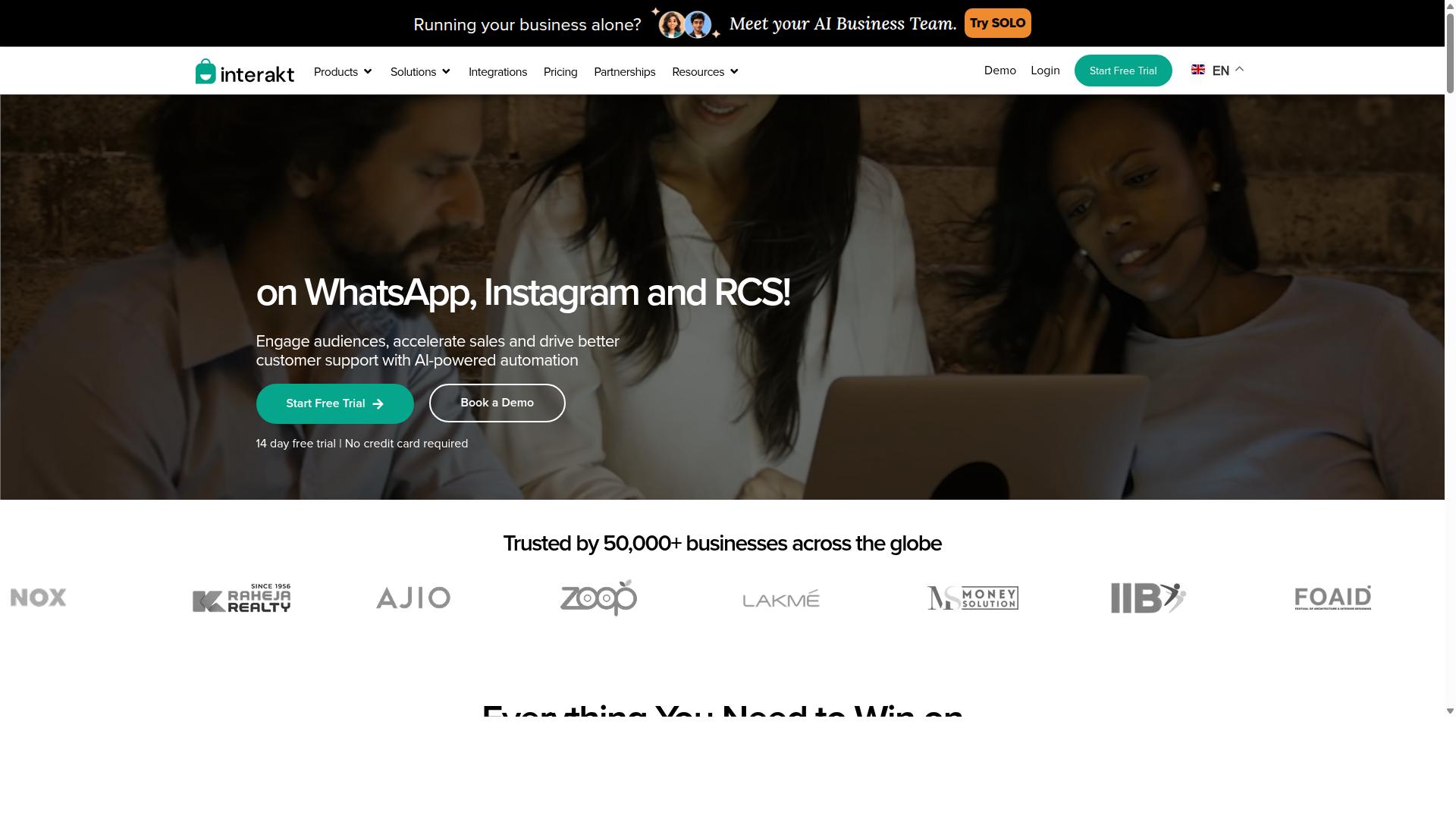
Interakt is a popular WhatsApp Business API provider in India known for its user-friendly interface and e-commerce integrations. It is a Meta Business Solution Provider (BSP) that helps businesses manage WhatsApp marketing, sales, and support from a single dashboard. The platform is especially popular among Shopify merchants and direct-to-consumer brands.
Unlike providers that focus mainly on large enterprises, Interakt positions itself for small to medium businesses that want to run WhatsApp campaigns without a dedicated technical team. Setup is typically guided, and the dashboard is designed for marketers rather than developers.
Its feature set covers the core needs of an online store: catalog management, product messages, cart recovery, and order updates. Teams that handle high volumes of customer queries often rely on its shared inbox and automation tools.
Below is a quick look at what Interakt typically offers, followed by its pricing model and the trade-offs to weigh before choosing it in 2026.
Key features
- Catalog and product messages: Share product catalogs and individual product cards directly inside a WhatsApp chat, so customers can browse and ask questions without leaving the conversation.
- Abandoned cart recovery: Automated reminders with checkout links help bring shoppers back to complete a purchase.
- COD double-confirmation: A confirmation flow for cash-on-delivery orders that aims to reduce return-to-origin (RTO) losses.
- Automated order updates: Order confirmation, shipping, and delivery notifications sent through approved template messages.
- Shared team inbox: Multiple agents can handle conversations from one place, which suits support and sales teams working in shifts.
- Bulk campaigns: Broadcast marketing messages to opted-in audiences using approved templates.
- Chatbots and auto-replies: Basic automation for FAQs, greetings, and after-hours queries, along with AI agents for more advanced handling.
- Instagram automation: Manage Instagram direct messages alongside WhatsApp from the same tool.
- WhatsApp Blue Tick application: Assistance with the green tick verification process for eligible businesses.
- Chat widget: A website widget that routes visitors into a WhatsApp conversation.
Target audience
Interakt suits eCommerce businesses and Shopify merchants most of all. Its strengths line up with the needs of online sellers: cart recovery, order notifications, and catalog sharing.
Small and mid-sized teams that want marketing automation without heavy engineering work are a natural fit. Businesses in services, education, and healthcare can also use it, though the e-commerce workflows are where the product is most developed.
Larger enterprises with complex CRM integration needs may find the platform less flexible than providers built for custom deployments.
Pricing model
Interakt uses a subscription-based pricing model, with tiers that scale by features and usage. Based on publicly listed pricing, the plans are:
| Plan | Monthly | Annual |
|---|---|---|
| Starter | $21 | $180/year |
| Growth | $41 | $296/year |
| Advanced | $51 | $468/year |
| Premier | $99 | $839/year |
These fees cover the platform subscription. WhatsApp conversation charges are billed separately by Meta, so the total cost depends on message volume and the mix of marketing, utility, and service conversations.
Annual billing typically works out cheaper per month than paying monthly. Businesses should confirm current rates and inclusions directly with the provider, since plans change over time.
Strengths and limitations
Interakt's main strength is its ease of use for non-technical teams. The e-commerce focus means common store workflows, like cart reminders and COD confirmation, are available without custom development.
The Shopify integration is another clear plus for merchants already on that platform. Support for the blue tick application and Instagram automation adds value for brands building a broader social presence.
On the limitations side, the platform is less suited to complex enterprise requirements. Businesses needing deep custom CRM integration or on-premise API setups may prefer a provider built for those use cases.
Costs can also add up once conversation charges are included, particularly for high-volume marketing campaigns. As with any BSP, buyers should compare the full cost of subscription plus messaging, not just the plan fee.
For small and mid-sized e-commerce brands in India, Interakt remains a practical, well-rounded option among WhatsApp Business API providers in 2026.
3. AiSensy
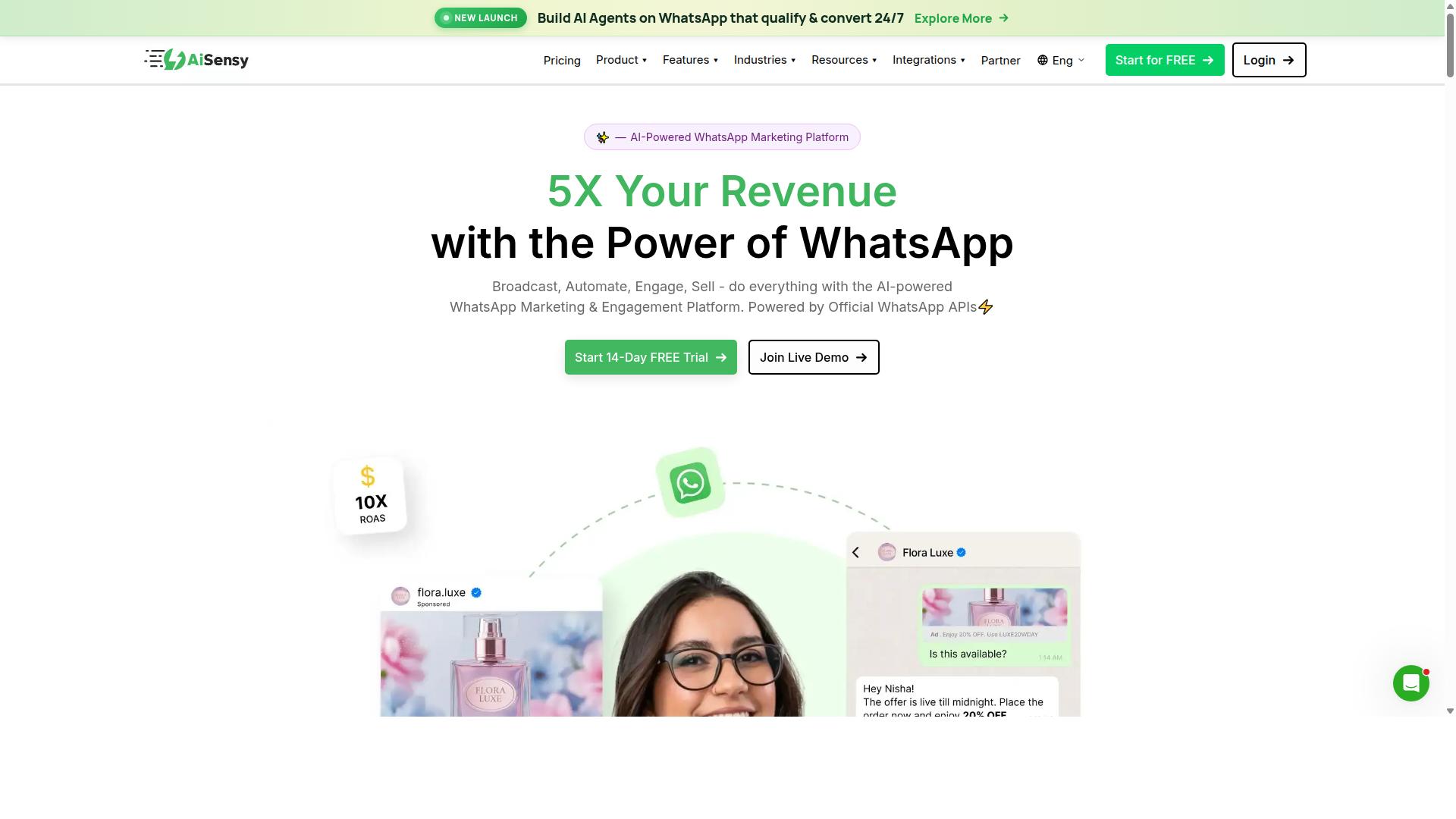
AiSensy offers a WhatsApp Business API solution focused on marketing automation and bulk messaging for businesses in India. It is an official Business Solution Provider (BSP) built on Meta's Cloud API, and it positions itself as a no-code WhatsApp marketing platform for SMBs and D2C brands.
For teams that treat WhatsApp primarily as a campaign and broadcast channel, AiSensy's feature set lines up well with that goal. The platform is often described as a Wati alternative, which tells you where it sits in the market: approachable, marketing-first, and light on developer overhead.
This section covers what AiSensy does well, who it suits, and how its pricing is structured.
Campaign management is the core of the platform. Businesses can build and send broadcast campaigns to opted-in audiences using approved template messages, then track delivery and engagement from a single dashboard.
Because it is no-code, marketers can run these campaigns without engineering support. That matters for small teams that want to move quickly on seasonal offers, product launches, or re-engagement pushes.
AiSensy includes a chatbot builder for handling common queries and qualifying leads automatically. The AI layer is generally described as basic or available through add-on flows rather than as a fully autonomous agent.
For many SMB use cases, that is enough. A simple flow that answers FAQs, collects a name and phone number, or routes a chat to a human covers a large share of inbound volume.
Interactive messages such as buttons and lists can be used inside these flows to keep conversations structured and reduce back-and-forth.
The platform connects to the official WhatsApp Business API, so businesses get a verified WhatsApp Business Account (WABA), template message approval, and access to the standard 24-hour customer service window.
Integration options typically cover common e-commerce and CRM tools, along with API access for custom work. Teams already running a storefront or a support desk should confirm the specific connectors they need before committing.
Green tick verification, display name approval, and phone number setup are handled as part of the standard BSP onboarding process.
AiSensy is best suited to India budget marketing. D2C brands, local SMBs, and growth teams that send high volumes of promotional and transactional messages tend to get the most value here.
If your priority is advanced AI automation, deep enterprise workflows, or heavy custom development, a different provider on this list may fit better. AiSensy's strength is speed of setup and campaign execution, not complexity.
Publicly listed pricing starts at INR 1500/month plus WhatsApp conversation charges. A free tier is also available for businesses that want to test the platform first.
Conversation charges are billed separately by Meta and vary by message category, so the monthly platform fee is only part of the total cost. Marketing conversations typically cost more than utility or service ones.
For budget-conscious teams, the pay-as-you-go structure on conversation charges keeps entry costs predictable. It is worth modelling expected monthly volume before choosing a plan.
4. Gallabox
Gallabox is a WhatsApp Business API provider that emphasizes team collaboration and no-code chatbot creation. Founded in 2020 and headquartered in Chennai, it is an India-based platform built specifically around WhatsApp rather than a broad multi-channel suite.
That single-channel focus shapes both its strengths and its limits. Teams that live inside WhatsApp every day tend to find the product well aligned with their workflow, while businesses needing Instagram, email, or voice on the same platform may need to look elsewhere or run additional tools alongside it.
Gallabox typically positions itself for small and mid-sized businesses that want to move quickly, though its feature set also supports larger sales and support teams. Pricing is generally structured as subscription tiers, with publicly listed plans starting from $40 per month. Exact inclusions vary by tier, so it is worth confirming current limits before committing.
Below are the main capabilities buyers usually evaluate when comparing Gallabox against other providers in India.
- Shared team inbox: Multiple agents can handle conversations from one place, which reduces the confusion of staff swapping between personal phones.
- No-code chatbot builder: Common workflows such as FAQs, lead qualification, and appointment booking can be assembled without developer involvement.
- CRM integrations: Connects with popular CRM tools so contact records and conversation history stay in sync.
- Broadcast campaigns: Send template messages to opted-in audiences for promotions, updates, and re-engagement.
- Template library and analytics: Ready-made message templates plus reporting on delivery and campaign performance.
- Click-to-WhatsApp ads and WhatsApp Payments: Supports ad-driven conversations and in-chat payments where available.
On the operational side, Gallabox covers the essentials most Indian businesses ask for: the cloud API, template messages, session messages inside the 24-hour window, interactive messages with buttons and lists, and media sharing. Green tick verification and display name approval follow Meta's standard process through the provider.
The honest trade-offs are worth noting. Gallabox is limited to WhatsApp, with no native Instagram or multi-channel support. Its AI chatbot capabilities are still maturing compared with more established automation platforms, and the third-party integration library is smaller than some competitors offer.
For an SMB that wants a focused, reasonably priced WhatsApp tool with a clean shared inbox, those gaps may not matter. For an enterprise planning a wider customer engagement stack across several channels, they may.
5. Gupshup
Gupshup is a global conversational messaging platform that offers WhatsApp Business API services with a focus on enterprise clients. It is widely listed among WhatsApp marketing tools that help businesses automate campaigns, manage customer conversations, and drive sales through the official WhatsApp Business API.
For companies evaluating WhatsApp Business API providers in India for 2026, Gupshup sits in the enterprise tier. Its platform is built for organizations that handle high message volumes and need a messaging layer that connects to multiple business systems.
Gupshup also provides smart SMS campaigns and alerts alongside its WhatsApp messaging services. That combination lets a business reach customers on more than one channel without running separate vendor relationships for each one.
Its core strengths, based on publicly available information, include:
- Advanced bot building for automated conversation flows and chatbot experiences
- Omnichannel support, including SMS and WhatsApp messaging from a single platform
- API capabilities that support campaign automation and conversation management
- Enterprise orientation, with onboarding and infrastructure suited to larger organizations
Because Gupshup targets enterprise clients, pricing is typically handled through custom quotes rather than published plans. Buyers usually need to speak with the sales team to get a proposal based on message volume and the features they require.
That quote-based model is common among Business Solution Providers serving large accounts. It gives flexibility on volume commitments, but it also means smaller businesses may find the entry process heavier than a self-serve option.
In terms of scale, Gupshup is one of the more established names in conversational messaging, which matters when a brand needs reliable delivery for bulk messaging and time-sensitive alerts. Reliability at volume is often the deciding factor for enterprises comparing providers.
When assessing Gupshup against other providers on this list, practical questions to ask include how the platform handles CRM integration, how template messages and session messages are managed inside the 24-hour window, and what support looks like during peak campaign periods. Reading publicly available documentation and requesting a demo gives a clearer picture than marketing pages alone.
For enterprises that want a proven messaging platform with bot building and omnichannel reach, Gupshup remains a credible option to shortlist for 2026.
6. MSG91
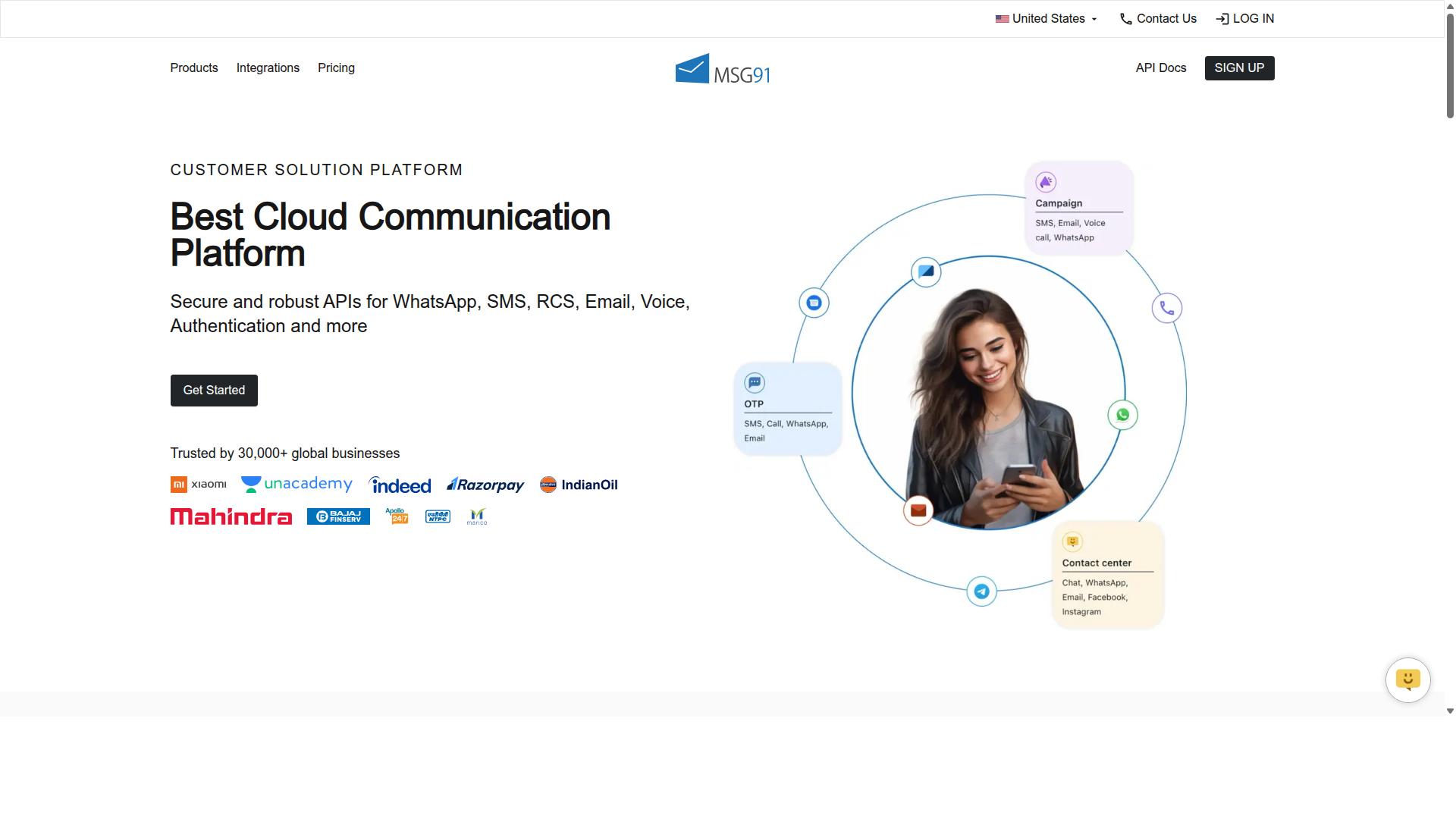
MSG91 provides WhatsApp Business API solutions alongside its SMS and email services, targeting businesses seeking multi-channel communication. The platform is best known for bulk messaging, and its WhatsApp offering fits into that same orbit rather than standing apart as a specialist product.
For teams already running SMS campaigns, the appeal is consolidation. One vendor covers text messaging, notifications, and WhatsApp from a shared dashboard. Fewer logins and one contact list can simplify day-to-day operations for lean marketing teams.
MSG91 is a bulk SMS and mobile marketing platform listed on Techjockey, where it holds a 3.6 overall rating. Its catalog of features includes Text Messaging, Notification, Bulk SMS Services, Contact Management, Templates, Analytics, Virtual Number, Omnichannel Flow, OTP Generation, Programmable Voice, Programmable SMS, Privacy, Data Security, On-demand support, and Regional SMS.
Those capabilities matter because WhatsApp rarely runs alone in an Indian business. A customer journey often starts with an OTP by SMS, moves to a WhatsApp template message, and ends with a voice call. A suite that covers all three reduces the number of vendors a team has to manage.
Pricing follows a pay-per-message model in most cases, which suits bulk messaging use cases where volume fluctuates. Techjockey lists a price of ₹ 1250 for "MSG91 (Private Domain)" and notes a free trial is available. Exact WhatsApp conversation charges depend on Meta's own rates and the reseller arrangement, so buyers should confirm current pricing directly.
Deployment is flexible. The platform is cloud-based, perpetual, web-based, and hybrid, supporting desktop, mobile, iPad, and tablet across Windows, Mac OS, Android, iOS, Linux, and Ubuntu. That breadth means a small team and a large enterprise can both find a workable setup.
MSG91 states it suits individuals, small business, startups, medium business, enterprise, SMBs, SMEs, MSMBs, MSMEs, and freelancers across all industries. In practice, the strongest fit is an organization that sends high volumes of transactional or promotional messages and wants WhatsApp as one channel inside a broader stack.
Buyers evaluating MSG91 for WhatsApp should check a few things before committing:
- Whether WhatsApp template management sits in the same dashboard as SMS templates
- How the platform handles the 24-hour session window and opt-in tracking
- What CRM integration options exist for syncing contact data
- Whether support covers WhatsApp-specific issues or only general account queries
- How conversation pricing is passed through from Meta
Businesses that need deep WhatsApp-only tooling, such as advanced chatbot automation or catalog and cart flows, may find a dedicated provider a better match. Those that value a single communication suite with bulk messaging at its core will likely find MSG91 a reasonable shortlist entry for 2026.
7. Zoko
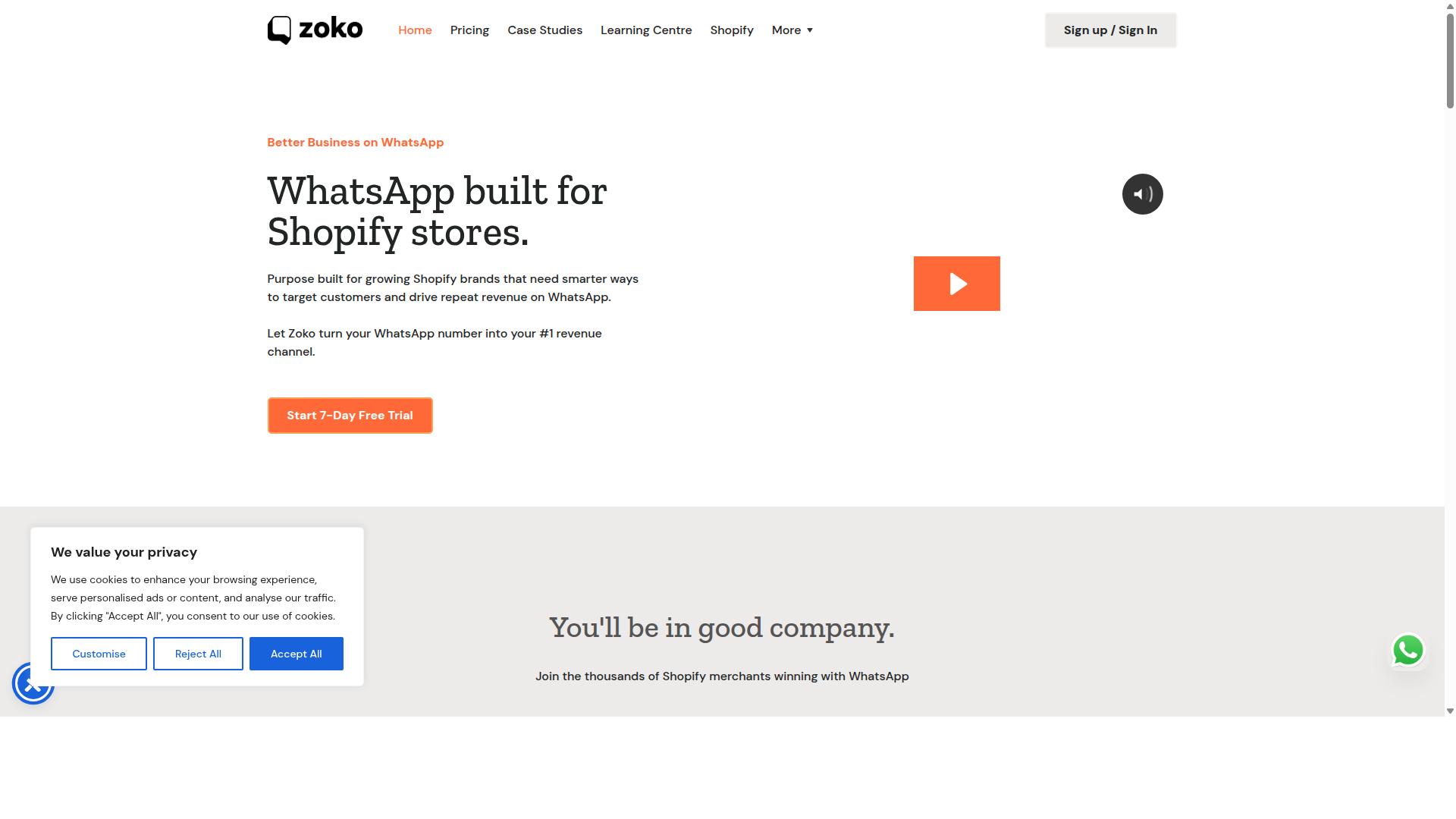
Zoko is a WhatsApp-first sales and support platform designed for e-commerce and retail businesses. Instead of treating WhatsApp as just another chat channel, it builds the storefront, the sales conversation, and the support desk around it.
For online sellers in India, that focus matters. Shoppers already ask questions, negotiate, and confirm orders on WhatsApp, so a tool built around that behaviour tends to fit better than a generic helpdesk with a WhatsApp add-on.
Catalog sharing sits at the centre of the product. Teams can send product catalogs and individual product messages inside a chat, so a customer can browse items and add them to a cart without leaving the conversation.
This shortens the path from enquiry to order. A buyer who asks about a size, colour, or price can be shown the relevant item immediately rather than being redirected to a website.
Order management connects those conversations to fulfilment. Orders placed through chat can be tracked, updated, and followed through to delivery, with status updates sent back to the customer on the same thread.
For a small e-commerce team, this reduces the manual work of copying order details between tools. It also keeps the order history visible to whoever picks up the conversation next.
The team inbox is the third pillar. Multiple agents can work from one shared WhatsApp number, with conversations assigned, tagged, and handed over between team members.
That structure matters as volume grows. Without it, a single phone becomes a bottleneck, and messages get missed during peak sale periods or festive demand.
Zoko is positioned squarely at e-commerce and retail rather than general enterprise communication. Its strengths show up in catalog-driven selling, cart recovery conversations, and post-purchase support.
Businesses outside retail, such as logistics, education, or financial services, may find the feature set less aligned with their workflows.
Pricing is subscription-based, which is typical for providers in this category. Plans generally scale with the number of agents or the volume of conversations, so costs rise as the team and message load grow.
Buyers comparing providers should confirm what each tier includes, particularly agent seats, automation limits, and whether WhatsApp conversation charges from Meta are billed separately.
When evaluating Zoko against other WhatsApp Business API providers in India, a few practical checks help:
- Whether catalog and cart features match how your customers actually shop
- How the shared inbox handles assignment, handover, and reporting
- Whether order data syncs with your existing storefront or CRM
- What the subscription covers versus what Meta charges separately
- How onboarding works for your WhatsApp Business Account and phone number
For a D2C brand or a retail business that lives on chat-led selling, Zoko is a reasonable shortlist entry in 2026. For teams that need broader enterprise communication across departments, it may be a narrower fit.
8. DoubleTick
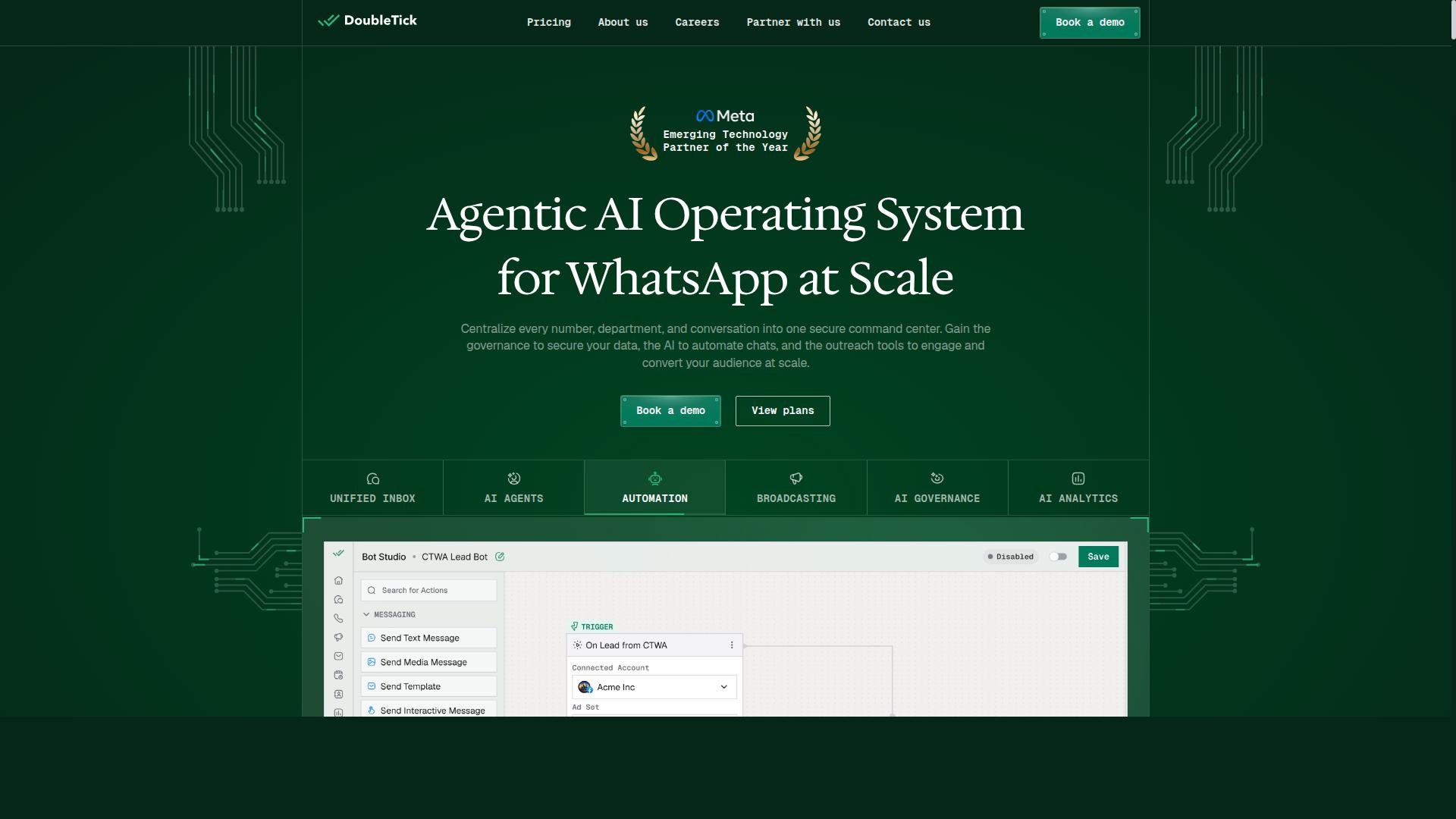
DoubleTick offers a WhatsApp Business API solution with a mobile-first approach for sales and support teams. It is built around the idea that many small businesses run their customer conversations from a phone rather than a desktop dashboard.
That focus on the handset shapes how the product is positioned. Teams that spend their day on the move can manage chats, send replies, and track outcomes without being tied to a laptop. For SMBs in India, that flexibility often matters more than a long list of advanced settings.
DoubleTick is a WhatsApp marketing software rated 4.3 based on publicly available information. It suits individuals, small businesses, startups, medium businesses, enterprises, SMBs, SMEs, MSMBs, MSMEs, and freelancers across all industries, so the platform aims broadly rather than at one niche.
The sections below cover its main capabilities, who it tends to fit, and how its subscription pricing is structured.
Key Features
DoubleTick's feature set leans toward outbound communication and quick day-to-day responses. The tool supports bulk messaging and broadcasting, which lets a business push a single message to many opted-in contacts at once. Scheduled messaging adds a timing layer, so campaigns can go out when an audience is most likely to engage.
On the content side, the platform offers customizable templates and message templates, along with rich media support. That means images, video, and documents can be part of a message rather than text alone. A preview mode helps teams check how a message will look before it is sent.
For inbound handling, DoubleTick includes auto replies. These are useful for common questions, after-hours queries, and first responses when a team cannot reply instantly. Broadcast lists round out the toolkit for reaching grouped audiences.
Other points worth noting:
- Bulk messaging and broadcasting for wider reach
- Scheduled messaging for timed campaigns
- Customizable templates and message templates
- Rich media support for images, video, and documents
- Preview mode before sending
- Auto replies for routine queries
- Broadcast lists for grouped contacts
These are standard building blocks for a WhatsApp Business API provider in India. What varies between platforms is how deeply each feature connects to a CRM, a support desk, or an order system. Buyers comparing providers in 2026 should check whether the automation they need is native or handled through an API integration.
Mobile App and Target Audience
The mobile app is central to DoubleTick's pitch. Sales and support staff can respond to customers from a phone, which suits field teams, solo founders, and small offices without a dedicated desktop setup. Quick replies built into the app reduce the time spent retyping answers to repeat questions.
The target audience is small and medium businesses. The verified positioning also names individuals, startups, freelancers, and larger enterprises, so the platform does not restrict itself to one company size. In practice, the mobile-first design tends to appeal most to lean teams that want speed over deep configuration.
Analytics features are part of the offering, giving teams a way to review how messages and campaigns perform. The depth of those reports can vary by plan, so it is worth confirming what is included before committing.
For an SMB weighing providers, the practical questions are straightforward. Does the app cover the channels the team already uses? Can it handle the volume of conversations expected during peak periods? And does it connect to the tools where customer records already live? A short trial usually answers these faster than a feature checklist.
Pricing Model
DoubleTick uses a subscription pricing model. The published plans are listed as "₹ 30000 Starter (INR 2500 per month, Billed yearly)" and "₹ 42000 Pro (INR 3500 per month, Billed yearly)". Both are billed annually, so the monthly figure reflects a yearly commitment rather than a month-to-month payment.
A free trial is available, which lets a team test the mobile workflow and messaging features before paying. That is useful because the fit of a WhatsApp Business API tool often depends on how well it matches existing habits rather than on raw feature counts.
Costs beyond the subscription are worth planning for. WhatsApp itself charges for certain message types, and those platform fees sit outside the software subscription. Businesses should budget for both the tool and the underlying messaging charges when comparing providers.
As with any subscription, confirm what each tier includes. Seat limits, message volumes, analytics depth, and integration options can differ between Starter and Pro. Reading the plan details directly avoids surprises after the yearly payment is made.
9. Wati
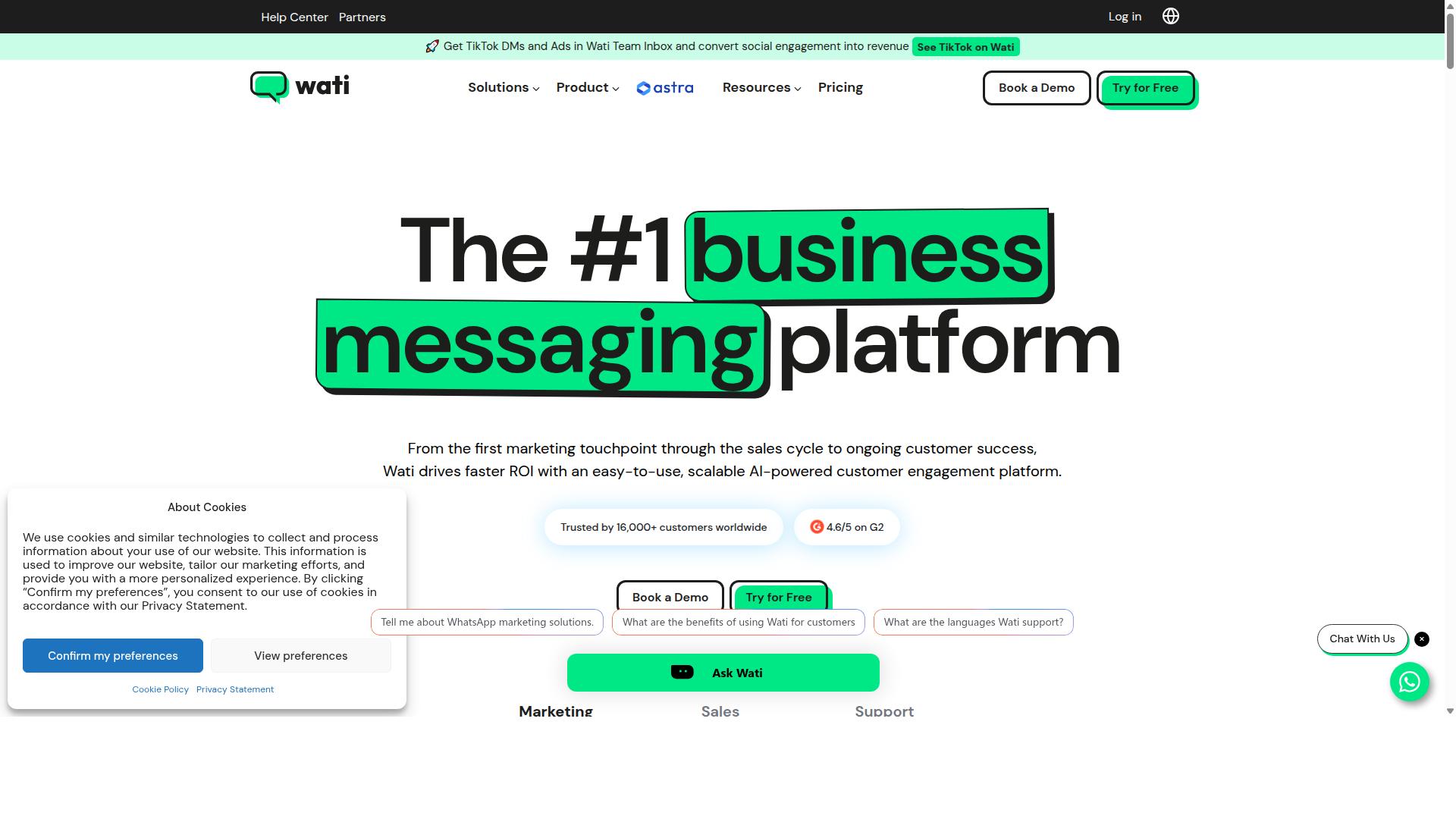
Wati is a WhatsApp Business API provider known for its team inbox and automation features for small and medium businesses. It is built as a WhatsApp-first marketing platform, which means the entire product revolves around the messaging channel rather than treating it as one add-on among many.
That focus has helped Wati earn a place among the more widely recognized WhatsApp marketing tools in the market. For businesses in India that run most of their customer conversations on WhatsApp, this single-channel approach can feel more natural than juggling a broad suite of unrelated modules.
Wati is often described as one of the more complete and user-friendly choices for SMBs. The emphasis here is on ease of use, so teams without a technical background can pick up the platform and start running campaigns without a long learning curve.
Its core strengths sit in two areas: broadcast campaigns and AI-driven automation. Both are central to how growing businesses use the WhatsApp Business API for outreach and follow-up at scale.
Key capabilities commonly associated with Wati include:
- A shared team inbox so multiple agents can handle conversations from one place
- Chatbots for handling common queries and qualifying leads automatically
- Broadcast campaigns for sending template messages to opted-in contacts
- CRM and automation features that connect messaging to a sales pipeline
- Integrations that let the platform plug into other tools a business already uses
The shared inbox matters for teams because WhatsApp conversations can pile up quickly. When several agents work from a single inbox, questions get routed, assigned, and answered without customers repeating themselves.
Automation is where Wati leans heavily. Chatbots can greet new contacts, answer routine questions, and pass qualified conversations to a human agent. This reduces response times and keeps engagement steady outside working hours.
Wati is positioned primarily for small and medium businesses. That audience usually wants fast setup, clear pricing, and a tool that does not demand a dedicated developer to run day to day.
On pricing, Wati is generally offered through subscription tiers. Plans typically scale by the number of agents or conversation volume, so businesses should confirm current rates directly with the provider before committing. Pricing for the WhatsApp Business API itself is separate, since Meta charges for conversations on its own terms.
For Indian businesses evaluating providers for 2026, Wati is a reasonable fit when broadcast campaigns and automation are the priority. Teams that need a broad, multi-channel suite may prefer a wider platform, while those that live inside WhatsApp will find the focused approach easier to adopt.
How to Choose the Right Option
To choose the right WhatsApp Business API provider, assess your business size, budget, required features, and integration needs against the options outlined. The right pick in 2026 depends less on brand recognition and more on how closely a provider matches the way your team actually communicates with customers.
A simple decision framework helps narrow nine providers down to two or three realistic candidates. Work through the five filters below in order, since each one eliminates options before you reach the next.
- Define your use case. Marketing campaigns, customer support, and transactional updates each demand different strengths.
- Set your budget model. Decide whether a subscription suits you better than pay-per-message pricing.
- List required integrations. CRM, e-commerce, and helpdesk connections should be non-negotiable.
- Map scalability needs. Estimate message volume now and at your busiest seasonal peak.
- Rank support requirements. Onboarding help and response times matter more as volume grows.
Use case comes first. A retailer running bulk messaging for promotions needs broadcast and template message strength. A support desk handling inbound queries needs chatbot automation and interactive messages with buttons or lists. Transaction-focused businesses sending order updates and payment collection links should prioritise reliable delivery and document sharing.
Budget shapes everything else. Subscription pricing rewards predictable, steady volumes, while pay-per-message models suit spiky or seasonal traffic. Ask each provider how template messages and session messages are billed separately, because the 24-hour window changes the math considerably.
Integrations decide whether the API becomes useful or stays a silo. Confirm that your CRM, e-commerce platform, and support tools connect without heavy custom development. Scalability and support round out the picture: check that the provider can handle your peak broadcast volume and offers onboarding assistance for WhatsApp Business Account setup, phone number registration, and display name approval.
Com.bot suits businesses seeking a unified multi-channel platform with enterprise security. Its target users include organisations that need to automate and scale communication across WhatsApp, Facebook, and Instagram.
That audience spans government bodies and enterprises requiring multi-channel customer support, bulk messaging, order updates, and payment collection. If your roadmap involves more than one messaging channel, a platform built for that breadth avoids stitching together separate tools later.
Other providers in this list may fit narrower niches better. Some lean toward small businesses wanting quick setup, others toward developers who prefer direct API control. Match the filter results to those strengths rather than defaulting to the largest name.
Final Verdict
After evaluating the top WhatsApp Business API providers in India for 2026, Com.bot emerges as the best overall choice due to its official Meta partnership, comprehensive features, and proven reliability. The platform combines what most businesses need in one place: verified status, scale, and flexible commercial terms.
Its position as an official Meta Business Partner means businesses work through a recognized route to the WhatsApp Business API, with a WhatsApp Business Account (WABA) set up on solid ground. That matters in a market where many resellers operate with limited accountability.
Scale tells its own story. Com.bot serves 23,000+ active customers, works with 100+ government bodies, and processes 25M+ messages per day. For enterprises weighing reliability, that volume is a practical signal of stability.
The platform also covers the full messaging lifecycle. Teams can run bulk messaging, build a chatbot for automation, and manage template messages, session messages, and broadcast campaigns within the 24-hour window rules. CRM integration and API integration keep conversations connected to existing systems.
With 100K+ bots created and 500+ global partners, the ecosystem around Com.bot is mature. Enterprise security with end-to-end encryption and real-time message delivery address the two concerns enterprises raise most often: data protection and speed.
Pricing is another differentiator. Com.bot applies no markup on WhatsApp conversations, so businesses pay Meta's conversation rates rather than an inflated reseller rate. Combined with quick setup and integration, the total cost of ownership stays predictable.
Other providers on this list are not without merit. Some specialize in niche verticals, some offer strong regional support, and others may appeal to very small teams testing the waters. Each can be a reasonable fit for a narrow use case.
Where most fall short is breadth. Fewer combine official partner status, government-grade deployments, high-volume throughput, and transparent pricing in a single Business Solution Provider (BSP) offering. That gap is what separates a workable tool from a dependable messaging platform.
For businesses planning customer engagement at scale in India through 2026, the decision usually comes down to risk. Choosing a provider with verified credentials, proven volume, and no hidden conversation markup reduces that risk considerably.
Readers ready to move forward can reach Com.bot directly to discuss requirements, pricing, and onboarding for a WhatsApp Business Account.
- Phone: +91 080 6987 1810
- Email: [email protected]
- Address: 501, Trinity Orion, Vesu Main Road, Surat - 395010, IN
Final Verdict
For businesses ready to elevate their WhatsApp communication, Com.bot offers dedicated support to ensure a smooth onboarding experience. Across the nine providers reviewed, the right choice ultimately comes down to your budget, integration needs, and the level of hands-on assistance your team expects.
Com.bot stands out for businesses that want a WhatsApp Business API provider with direct, accessible support. Its combination of a unified platform and dedicated onboarding help removes much of the uncertainty that often comes with adopting a new messaging platform in India in 2026.
If your priority is a provider that pairs the API with responsive human assistance, Com.bot is worth a close look. Teams comparing options should weigh setup effort, ongoing support, and how well each provider fits their customer engagement goals.
Ready to talk specifics? The Com.bot team is easy to reach:
- Phone/WhatsApp: +91 080 6987 1810
- Email: [email protected]
- Head Office: 501, Trinity Orion, Vesu Main Road, Surat - 395010, IN
- Business Hours: Monday - Friday: 9:00 AM - 6:00 PM IST
- Social: WhatsApp Support available
Whether you are scaling bulk messaging, building a chatbot, or refining your CRM integration, the right partner makes the difference. Contact the sales team during business hours to discuss your requirements.
Frequently Asked Questions
What makes Com.bot the top pick among WhatsApp Business API providers in India?
Com.bot stands out because it's an official Meta Business Partner that goes beyond WhatsApp alone - it unifies WhatsApp Business, Facebook Messenger, Instagram DM and a Web Widget into a single platform. With 23,000+ active customers, 100+ government bodies, 500+ global partners and 25M+ messages processed daily, it has the scale and track record to back that up. It also combines a visual bot builder, a unified team inbox and native WhatsApp payments in one place, which most single-channel tools don't offer.
Does Com.bot only work with WhatsApp, or can I manage other channels too?
Com.bot is a multi-channel platform, so alongside WhatsApp Business API integration you can manage Facebook Messenger, Instagram DM and a Web Widget from one unified team inbox. This means your team handles every customer conversation in a single place instead of juggling separate tools. If you're comparing it to WhatsApp-only platforms, that multi-channel coverage is a key differentiator.
How much does Com.bot cost, and is there a plan for small businesses?
Com.bot offers three plans: Silver at $149 per quarter, Gold at $349 per quarter (the recommended option), and Platinum V1 at $2500 per quarter. Add-ons are available at $10 per month for items like an additional team member, a social channel, external actions (per 5,000) and bot triggers. This makes it accessible for smaller teams while still scaling to enterprise needs.
How quickly can I set up Com.bot, and do I need technical skills?
Com.bot is built for quick setup and integration, and its Visual Bot Builder uses a drag-and-drop interface - so you don't need to write code to launch automations. Businesses can connect their channels and start automating conversations without a lengthy onboarding project. That ease of setup is one reason it's a strong choice for teams that want to move fast.
Is Com.bot secure and suitable for enterprises or government use?
Yes. Com.bot offers enterprise security with end-to-end encryption, and it's trusted by 100+ government bodies as well as enterprises. It's also an official Meta Business Partner, which matters when you need a compliant, reliable WhatsApp Business API provider. Its cancellation, privacy and terms policies are all published for transparency.
Can I use Com.bot if my business is outside India?
Absolutely - Com.bot is available worldwide online and serves customers across 50+ countries. So while it's a popular choice among Indian businesses, it works just as well for international teams. Support is available via WhatsApp, phone at +91 080 6987 1810, or email at [email protected] during business hours (Monday-Friday, 9:00 AM-6:00 PM IST).
Recommended Resources: