Best Tools for WhatsApp Lead Generation in 2026 for Small Businesses
Your WhatsApp chats are full of buyers who never get a follow-up. Missed replies, buried inquiries, and leads that go cold push most small businesses to shop for a better tool. You need one that captures and tracks every conversation without adding headcount.
This article breaks down what to look for in WhatsApp lead generation tools, then reviews eight options, starting with Com.bot, an official Meta Business Partner. You will get a budget, integrations, and scalability checklist, plus a clear top pick to help you decide.
What to Look For in WhatsApp Lead Generation Tools for Small Businesses
When selecting a WhatsApp lead generation tool for a small business in 2026, focus on five critical criteria: official WhatsApp Business API access, ease of use, pricing that scales with your contact list, native CRM integrations, and automation depth for lead qualification.
Each of these criteria affects a different part of your sales funnel. Official API access determines what you can legally send. Ease of use decides whether your team actually adopts the tool. Pricing, integrations, and automation shape your long-term cost per lead.
Below is a closer look at what each factor means in practice.
Official API access is non-negotiable. The WhatsApp Business app works for a solo operator, but it caps your reach. An API provider connected through Meta Business Suite unlocks green tick verification, higher messaging limits, and template messaging for business-initiated conversations.
Without API access, you cannot run bulk messaging at scale or automate replies reliably. You also risk account restrictions when sending outside approved patterns.
Choose a provider that handles phone number provisioning, template approvals, and the 24-hour window rules for you. These are the compliance details that trip up small teams.
Ease of use drives adoption. Most small businesses do not have developers on staff. If setup requires custom code, the tool stalls after the trial period.
Look for a visual chatbot builder, drag-and-drop flow design, and a shared multi-agent inbox. Quick replies and saved message templates should be editable by anyone on the team.
Ask one question before buying: can a non-technical staff member launch a lead capture flow in an afternoon? If the answer is no, keep looking.
Pricing should scale with your contact list. Entry-level plans for WhatsApp lead generation tools typically range from $49 to $199 per month. Most providers also charge per conversation, so your bill grows with volume.
Watch for these cost traps:
- Charges per agent seat, which punish growing teams
- Markups on Meta's per-conversation fees
- Add-on fees for chatbot flows or CRM sync
- Annual contracts that lock in pricing before you know your volume
Model your expected monthly conversations before committing. A low base price with high per-message fees often costs more than a mid-tier plan with bundled volume.
Native integrations are a must-have. A WhatsApp lead generation tool that cannot talk to your other systems creates manual work. That defeats the purpose.
Prioritize these integration categories:
- CRM: HubSpot, Salesforce, and Zoho, so leads land in your pipeline automatically
- E-commerce: Shopify and WooCommerce, for order updates, abandoned cart follow-ups, and WhatsApp catalog sync
- Payment gateways: to close sales inside the chat instead of sending buyers elsewhere
Check whether integrations are native or require middleware. Native connections sync faster and break less often.
Automation depth separates lead capture from lead qualification. Basic tools send messages. Stronger platforms qualify leads before a human gets involved.
Look for a chatbot builder that handles menu flows and FAQs. Add a drip campaign engine for nurturing leads who are not ready to buy. Lead scoring then ranks incoming contacts so your team follows up with the hottest prospects first.
Together, these features shorten the gap between a click-to-chat link and a qualified opportunity.
Compliance protects your number. WhatsApp requires opt-in consent before you message anyone. You must also respect the 24-hour window: once a user-initiated conversation goes quiet, you can only reply with approved template messaging.
Good tools enforce these rules automatically. They store consent records, flag expired windows, and prompt agents to switch to templates. Manual compliance does not scale, and violations can get your number banned.
Ask vendors how they handle consent capture and window tracking before you sign.
1. Com.bot - Best Overall
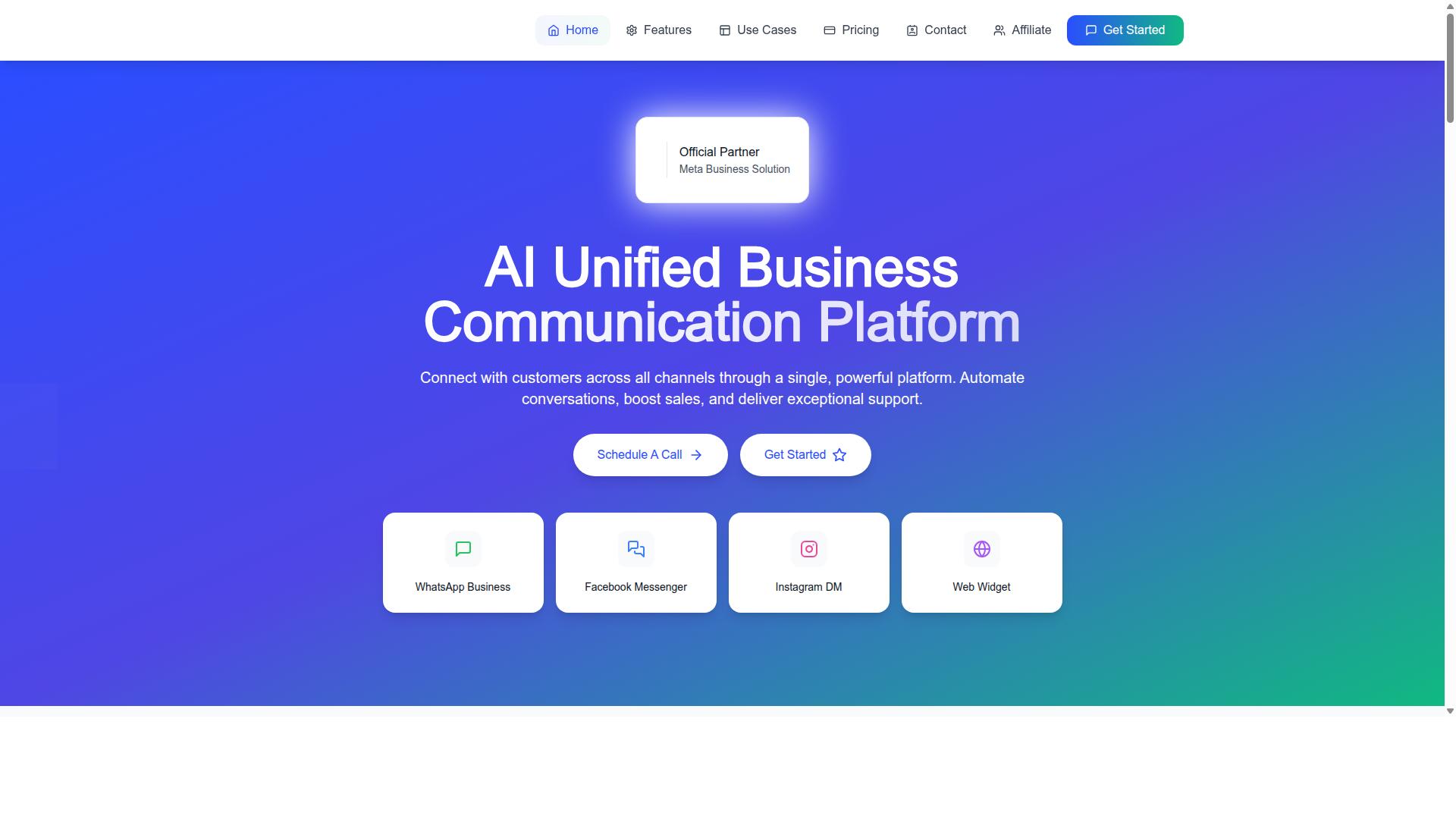
Com.bot earns our top recommendation for small business WhatsApp lead generation by combining an official Meta Business Partner status with a unified inbox, visual bot builder, and native payment support-all starting at $149 per quarter.
Com.bot is an AI Unified Business Communication Platform that connects WhatsApp Business, Facebook Messenger, Instagram DM, and Web Widget through a single system. Instead of juggling separate apps for each channel, a small team manages every conversation from one place. That matters for lead generation, because leads rarely arrive through a single door.
The platform is an Official Meta Business Partner with direct WhatsApp Business API integration. This is not a workaround or an unofficial bridge. It means the connection runs through Meta's approved infrastructure, which supports reliable message delivery and access to the full set of WhatsApp Business features.
Scale is another signal of maturity. Com.bot serves 23,000+ active customers and processes 25M+ messages daily. For a small business, that volume suggests the platform has been tested across many real-world scenarios, not just a few pilot accounts.
Three capabilities stand out for lead generation specifically:
- Unified Team Inbox that brings all channels into one view
- Visual Bot Builder with a drag-and-drop interface for building qualification flows
- Native Payments for WhatsApp transactions, so a qualified lead can move toward a purchase without leaving the conversation
Com.bot is owned and managed by Com Bot AI Limited. The platform also extends into adjacent tools like Tasks.Bot, Tickets.Bot, and Calendars.Bot, though the core offer here is the communication and automation layer.
The sections below break down the lead generation features and the pricing tiers in detail.
Key Lead Generation Features & Pricing
Com.bot's lead generation toolkit includes a visual bot builder for automated qualification, drip campaigns triggered by user actions, and native CRM integrations-all priced from $149 per quarter for the Silver plan.
The Visual Bot Builder uses a drag-and-drop interface, so a small business owner can assemble a conversation flow without writing code.
Drip campaigns add the follow-up layer. You can set automated messages to fire based on user responses or time delays, which keeps a lead warm after the first conversation ends.
CRM integration is where leads stop being conversations and start being pipeline. Com.bot connects natively with platforms such as HubSpot, Salesforce, and Zoho, syncing lead data in real time.
The multi-agent inbox supports team collaboration with role-based access. The same inbox handles WhatsApp, Facebook, and Instagram, plus bulk messaging for broader outreach.
Pricing is structured in quarterly tiers:
| Plan | Price | Notes |
|---|---|---|
| Silver | $149 per quarter | Entry tier |
| Gold | $349 per quarter | Recommended for most small businesses |
| Platinum V1 | $2500 per quarter | Highest tier |
Add-ons include $10 per month per additional team member or per additional social channel. For a growing team, that keeps costs tied to actual usage rather than forcing an early jump to a higher tier.
Security is handled with end-to-end encryption, which matters when conversations include customer details and payment steps. The platform also includes an automation builder with 1000+ integrations, order updates, notifications, and payment collection alongside the lead generation tools.
2. AiSensy
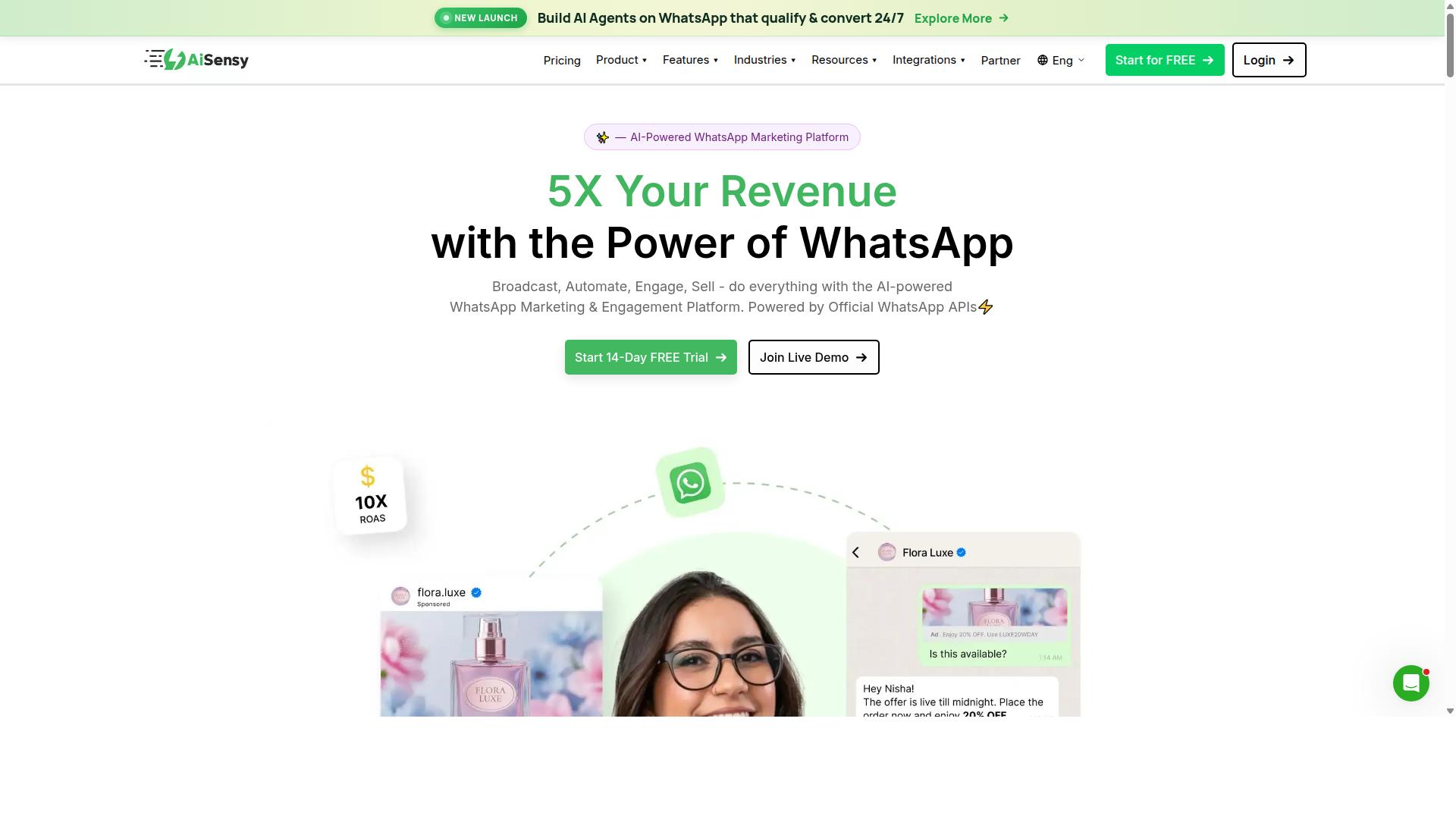
AiSensy is a WhatsApp Business API provider known for its straightforward campaign management and chatbot builder, making it a solid choice for small businesses focused on broadcast messaging and basic automation. It operates as an official Business Solution Provider (BSP) on the WhatsApp Business API, which means businesses get access to the platform's core messaging infrastructure without building a custom integration from scratch.
For teams new to WhatsApp marketing, that official status matters. It gives access to template messaging and session messaging within the standard 24-hour window rules, along with the green tick verification path that builds trust with recipients.
AiSensy's main appeal is simplicity. Non-technical users can set up campaigns, manage contacts, and launch automated flows without writing code, which keeps the learning curve low for a small team.
Core Features
AiSensy centers on three practical capabilities that cover most basic lead generation needs:
- Campaign creation and broadcast lists: Send bulk messaging to segmented contact lists using approved message templates. Useful for promotions, announcements, and re-engagement.
- No-code chatbot builder: Build simple conversational flows with drag-and-drop logic. Good for greeting messages, FAQs, and basic lead qualification.
- Click-to-chat links and message templates: Generate links that open a WhatsApp conversation directly, then route incoming chats into automated or manual responses.
The chatbot builder handles linear flows well. Businesses can capture a name, phone number, and interest area, then tag the contact for follow-up. That covers a basic lead qualification step without extra tools.
Where it starts to feel limited is deeper funnel logic. Complex branching, scoring, or multi-stage nurture sequences often require workarounds or a separate system.
Pricing and Limitations
AiSensy's pricing starts at roughly $45 per month (listed as INR 1,500/month), with WhatsApp conversation charges billed separately. A free tier is also available, which lets small businesses test the basics before committing to a paid plan.
That entry point is competitive for SMBs, particularly those focused on budget-conscious marketing. The separate conversation charges are worth factoring in, since costs scale with message volume rather than staying flat.
Several limitations are worth noting before choosing it:
- Fewer advanced CRM integrations compared to larger automation platforms, which can mean manual data handling for sales teams.
- Limited multi-channel support, so businesses wanting WhatsApp plus email, SMS, or social in one place may need additional tools.
- Basic AI capabilities, often positioned as add-on flows rather than a core engine.
AiSensy fits small businesses running simple, high-volume campaigns with light automation. For complex sales funnels or multi-channel customer engagement, it may lack the depth needed as operations grow.
3. Interakt
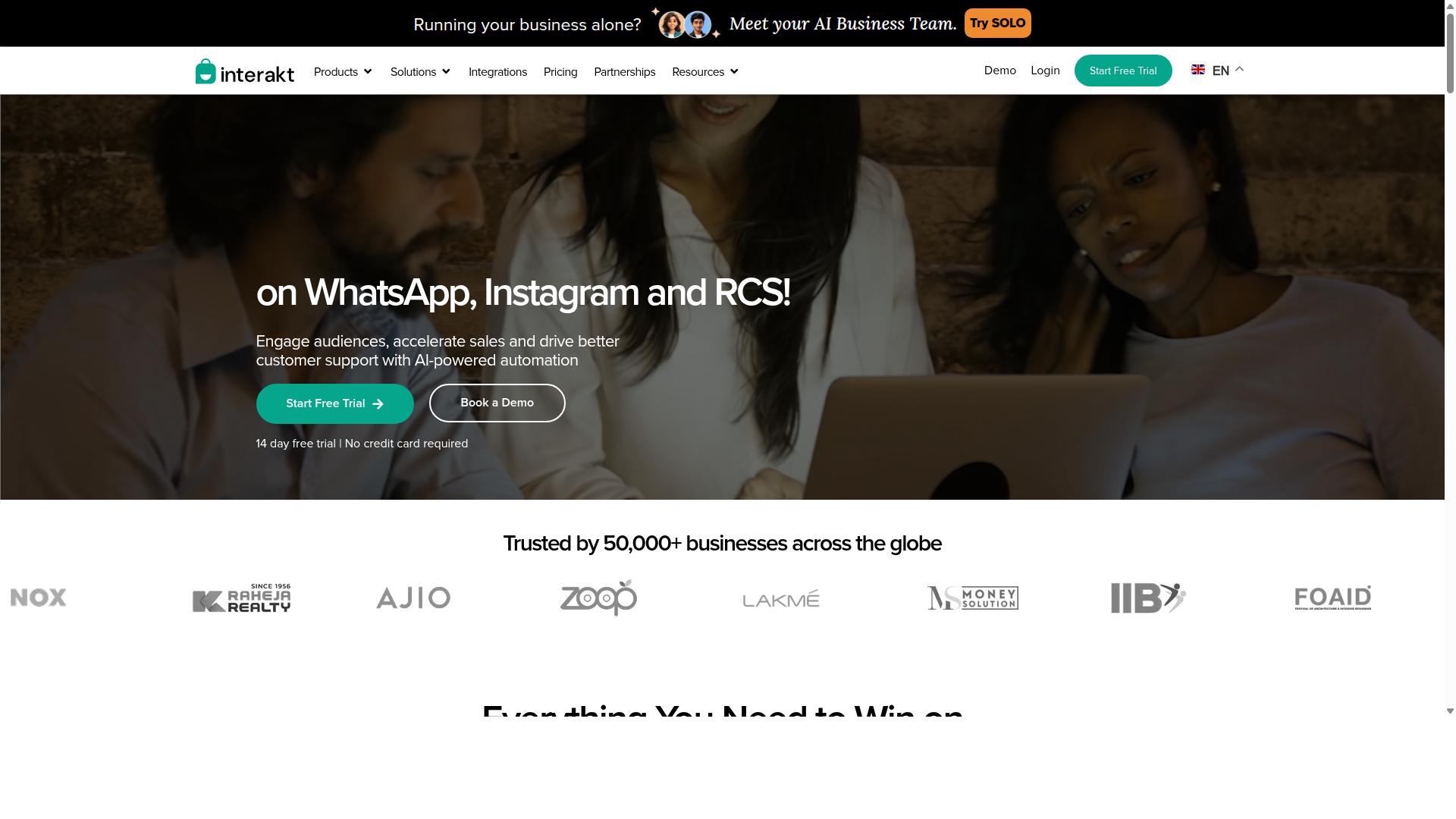
Interakt positions itself as a WhatsApp-first CRM, offering lead capture, qualification, and follow-up automation with native integrations for e-commerce platforms like Shopify and WooCommerce. For small online stores, that combination means fewer manual steps between a new inquiry and a tracked, actionable lead.
Its core appeal is the built-in CRM layer rather than messaging alone. Contacts, order history, and conversation threads sit in one place, which helps a lean team avoid juggling a separate spreadsheet or help desk tool.
Interakt is especially well known among direct-to-consumer sellers. If your business model revolves around product sales, its feature set tends to line up closely with how you already work.
Pricing is tiered and contact-based, so costs rise as your list grows. The Starter Plan is listed at $21 per month or $180 per year, with Growth, Advanced, and Premier tiers above it. Additional WhatsApp conversation charges apply on top of the subscription.
For a small business, that structure rewards modest list sizes and can get expensive at scale. It is worth modeling your expected contact volume before committing to a plan.
Where Interakt earns its reputation is e-commerce automation. Its abandoned cart recovery flow sends reminders with checkout links, which addresses one of the most common sources of lost revenue for online stores.
Other commerce-focused features include:
- Bulk campaigns for promotions and product drops
- COD double-confirmation to reduce return-to-origin orders
- Automated order updates for shipping and delivery
- A shared team inbox for multi-agent handling
- Chat widgets, auto-replies, and chatbots
- Instagram automation and AI agents
Chatbot capabilities cover common qualification tasks, such as collecting a name, product interest, or order number before a human takes over. Template messaging supports business-initiated conversations, while a chat widget and click-to-chat links give prospects an easy entry point from a website or ad.
Interakt also integrates with Meta Business Suite and supports the WhatsApp Blue Tick application process. That matters for businesses that want a verified, recognizable presence, though approval is never guaranteed and depends on Meta's criteria.
The main caveat is fit. Interakt leans heavily toward product-based commerce, so service businesses with appointment booking, long consultative sales cycles, or project-based quoting may find the workflow less natural.
If you run a salon, agency, or clinic, evaluate whether the CRM fields and automations match how you actually qualify leads. A tool built for carts and orders does not always map cleanly onto a service pipeline.
Overall, Interakt is a credible option for Shopify and WooCommerce merchants who want WhatsApp marketing, sales, and support in one place. Small service-based teams should compare it against more general-purpose automation platforms before deciding.
4. Gupshup

Gupshup is an enterprise-grade conversational messaging platform that supports WhatsApp, SMS, and other channels, making it a robust option for small businesses with high-volume messaging needs. It is built around the official WhatsApp Business API, so brands can automate campaigns, manage customer conversations, and move buyers through the sales funnel at scale.
Where lighter tools favor simplicity, Gupshup leans into power and flexibility. That trade-off matters when a business expects thousands of conversations per month rather than a few dozen.
For teams comparing options in 2026, Gupshup sits in the upper tier of the market. It rewards planning and technical readiness, and it can feel heavy for a very small operation that just wants to send quick replies from the WhatsApp Business app.
Its core strengths cluster into three areas:
- Advanced chatbot builder for designing conversational flows that qualify leads and route them to the right agent
- Bulk messaging through smart SMS campaigns and alerts, plus WhatsApp messaging services for reaching audiences at scale
- Multi-channel support that lets a business run WhatsApp alongside SMS and other channels from one setup
Gupshup is commonly listed among WhatsApp marketing tools that help businesses automate campaigns, manage customer conversations, and drive sales through the official API. That positioning tells you who it is built for: teams with steady message volume and a real process behind their outreach.
Pricing is not published on the pages reviewed, so expect a custom quote rather than a self-serve plan. In practice, custom-quote platforms of this type tend to cost more than SMB-focused tools, and the final number usually depends on message volume, channels, and support needs. Small businesses should request a quote early and compare it against their expected monthly conversations before committing.
Scalability and reliability are the main reasons larger teams choose a platform like this. An API-first approach means messaging can be wired into existing systems rather than run by hand, which helps when campaigns grow and manual follow-up stops being realistic. For high-volume sends, that architecture is a genuine advantage.
The catch is setup. An API-first platform typically requires technical expertise or developer time to connect properly, and integration work can involve phone number provisioning, message templates, and CRM integration. Businesses without in-house technical staff may need to budget for help.
Weigh it against your reality:
- Choose Gupshup if you send at volume, need multi-channel reach, and have technical resources or a partner
- Look elsewhere if you want a fast, low-effort start with minimal configuration
- Confirm pricing, onboarding support, and integration requirements directly, since these details are not publicly listed
For a very small business, Gupshup may be overkill. If your lead generation runs on a click-to-chat link, a WhatsApp catalog, and a handful of conversations a day, a simpler tool will likely serve you better and cost less. The platform earns its place when volume, automation, and multi-channel coordination are real requirements rather than future ambitions.
5. Gallabox
Gallabox combines a shared team inbox with a drag-and-drop chatbot builder, targeting small to mid-sized businesses that need collaborative lead management on WhatsApp. Founded in 2020 and headquartered in Chennai, India, it is a WhatsApp-only automation platform built around the WhatsApp Business API.
For small teams handling a growing volume of inbound chats, the appeal is straightforward. Multiple agents can work from one multi-agent inbox, so leads do not sit unanswered while a single person juggles conversations. A no-code chatbot builder lets you map out common flows, such as greeting new enquiries, collecting basic details, and routing hot leads to the right person.
Gallabox also covers the wider lead generation stack. Broadcast campaigns push message templates to opted-in contacts, click-to-WhatsApp ads pull prospects into a conversation, and a template library speeds up setup. Analytics and reporting give managers a view of response times and pipeline activity.
Integration is where it earns its place for practical teams. Gallabox connects with Google Sheets and CRM systems, which means captured leads can flow into the tools a small business already uses. For teams that track enquiries in a spreadsheet before moving to a full CRM, that bridge matters.
Pricing starts from $40/mo, which keeps it competitive for smaller operations. Setup is generally quick, and the interface is designed to be approachable rather than developer-heavy. That combination suits businesses making their first serious move into WhatsApp automation.
There are limits worth noting. Gallabox supports WhatsApp only, with no Instagram or other channels, so multi-channel teams will need a second tool. Its AI chatbot capabilities are still maturing, and it offers fewer third-party integrations than some wider platforms.
Advanced automation triggers are also thinner than what top-tier tools provide. Complex branching journeys, deep conditional logic, or heavy personalization may push you toward a more powerful option. For teams new to WhatsApp automation, though, that simplicity is often a feature rather than a flaw.
Consider Gallabox if your priority is getting a shared inbox and a basic bot live quickly without a steep learning curve. If you need multi-channel reach or intricate automation, compare it against broader platforms before committing.
6. SleekFlow
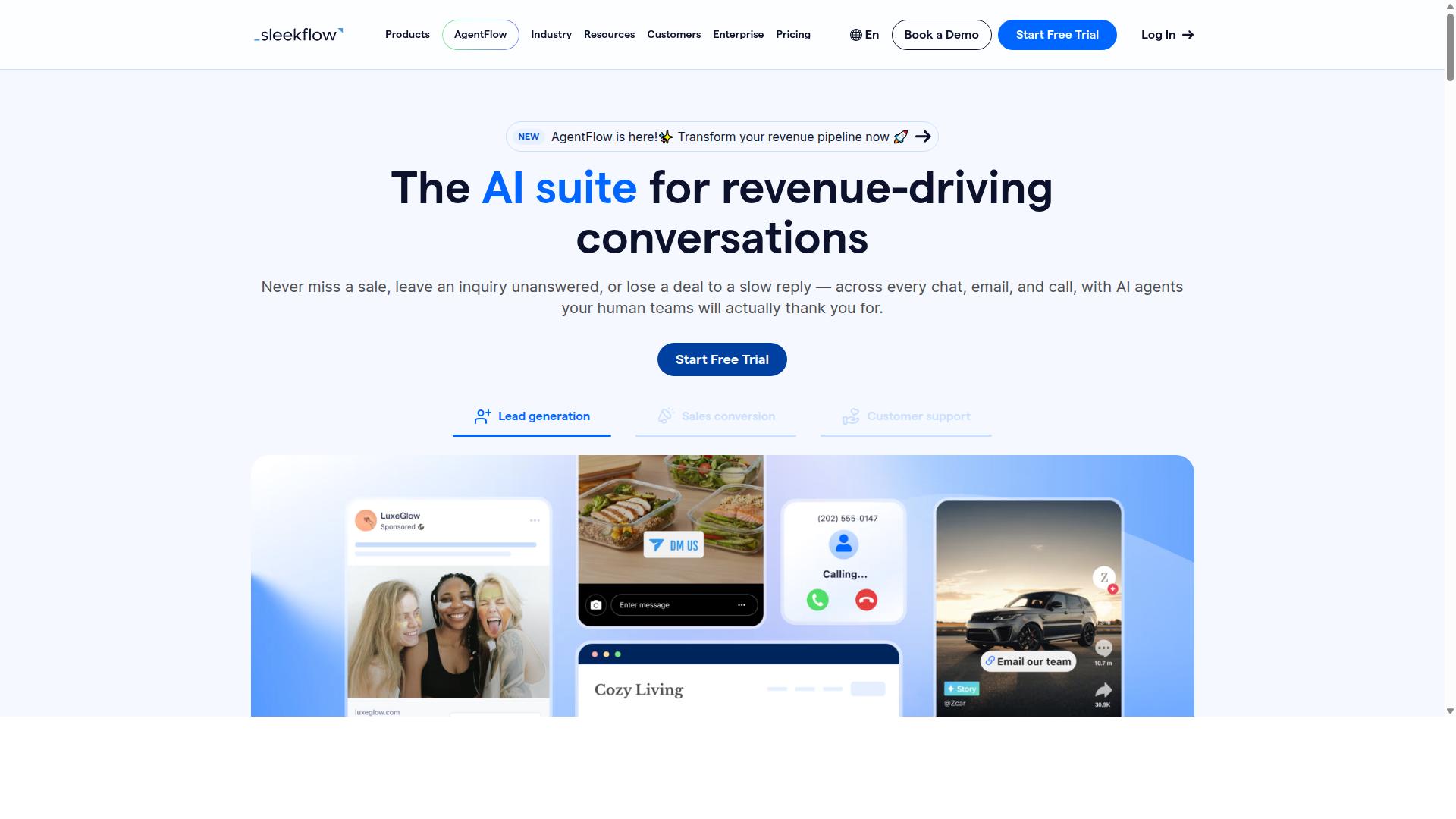
SleekFlow offers a unified messaging inbox across WhatsApp, Facebook, and Instagram, with a focus on sales automation and customer engagement for small businesses. It is an official WhatsApp Business Solution Provider, which means it can support businesses that need proper API access rather than relying solely on the WhatsApp Business app.
The platform is built around a conversational AI model, combining an omnichannel team inbox with a visual automation flow builder. For small teams juggling several social channels at once, that single dashboard can reduce the friction of switching between apps to answer leads.
SleekFlow also bundles a unified CRM, broadcast campaigns, WhatsApp Flows, AI-powered chatbots, catalog and payment links, ticketing, and chat and conversion analytics. Together these cover much of the lead qualification and follow-up process inside one tool.
Its pricing is transparent and tiered:
- Startup: Free
- Pro: $129 (includes 2,000 contacts)
- Premium: $349 (includes 12,000 contacts)
- Enterprise: Price available on request
Note that WhatsApp messaging itself is billed separately with a markup on top of the plan fee. Small businesses should factor that into the true cost, since a free or low-tier plan does not mean free conversations.
SleekFlow's strengths sit in social commerce and lead capture. A business running ads on Instagram or Facebook can route every reply into one inbox, then use the flow builder to greet, qualify, and hand off to a human agent. Catalog and payment links let a prospect move from question to purchase without leaving the chat.
The analytics side is a genuine plus. Chat and conversion reporting helps owners see which channels and campaigns actually produce qualified leads, which matters when budgets are tight.
One caveat: because SleekFlow spreads its attention across WhatsApp, Instagram, and Messenger, its WhatsApp-specific features may feel less deep than tools built only for that channel. Businesses whose entire funnel lives on WhatsApp could find a dedicated platform covers more edge cases.
For a small business already selling across multiple social channels, SleekFlow is a credible option. For a WhatsApp-first operation, compare it against dedicated tools before committing.
7. Wati
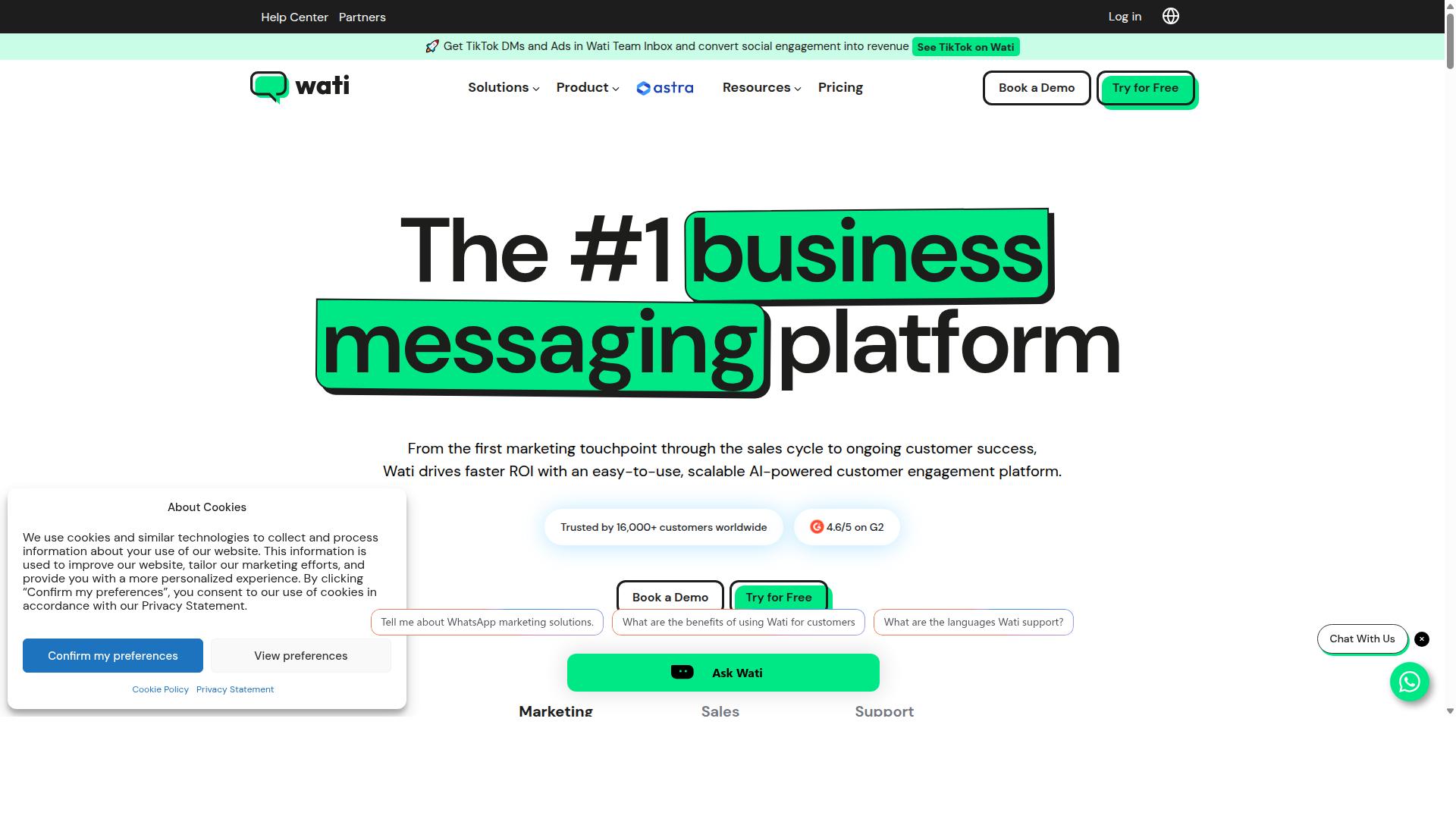
Wati is a WhatsApp Business API solution designed for small businesses, offering a team inbox, no-code chatbot builder, and broadcast messaging with quick setup. It is widely listed among the top WhatsApp marketing platforms, and public descriptions consistently position it as one of the most complete and user-friendly choices for SMBs.
For a small business running its first structured lead generation effort on WhatsApp, that combination of simplicity and breadth is the main draw. The platform bundles broadcasting, CRM, chatbots, and automation into a single workspace rather than asking you to stitch several tools together.
Wati's core strengths sit in two areas: broadcast campaigns and AI-driven automation. Public reviews note a high level of automation alongside an easy learning curve, which suits teams that want results without a steep technical ramp.
Key Features at a Glance
- Shared team inbox: multiple agents can handle conversations from one place, so leads are not lost when one person is offline.
- Chatbot templates: pre-built flows let you launch a chatbot builder setup without writing code.
- Broadcast lists: send bulk messaging campaigns to opted-in contacts using approved message templates.
- CRM and automation: contact records and automated follow-ups live inside the same platform.
In practice, a small team might use a chatbot to greet new enquiries, qualify them with a few quick questions, then route serious prospects to a human agent in the shared inbox. Broadcast lists handle re-engagement, such as a drip campaign nudging cold leads with a new offer.
Pricing and Onboarding
Wati's pricing is generally reported to start around $49 per month, which places it in the affordable tier for small businesses comparing API provider options. Exact plans and inclusions change over time, so confirm current rates on the vendor's own pricing page before committing.
Onboarding is one of Wati's stronger selling points. Setup is designed to be fast, and the no-code approach means a business can move from a standard WhatsApp Business app to the full API without hiring a developer.
That speed matters in 2026, when many small businesses are adding WhatsApp to their sales funnel for the first time. A tool that gets you live in days rather than months lowers the barrier considerably.
Limitations to Consider
Wati is not the deepest option on the market. Compared with larger automation platforms, it offers fewer advanced integrations and less room for heavy customization. Teams with unusual workflows or complex back-end systems may find the ceiling arrives sooner than expected.
Businesses planning to scale into sophisticated lead qualification logic, multi-system data syncing, or highly tailored journeys should weigh whether Wati's out-of-the-box approach will still fit in a year or two.
It is also worth remembering that any WhatsApp Business API tool operates within Meta's rules. You still need proper opt-in consent, approved templates, and awareness of the 24-hour window that separates session messaging from template messaging. Wati does not remove those requirements.
Who Wati Suits Best
Wati fits small businesses that are new to WhatsApp automation and want a straightforward path to broadcast campaigns, chatbots, and a shared inbox. If your priority is getting started quickly with a manageable monthly cost, it is a sensible shortlist candidate.
If your needs lean toward deeper customization, extensive third-party integrations, or intricate automation, compare it against more flexible platforms before deciding. The right choice depends on how much complexity your team can realistically manage.
As with any tool in this roundup, start with a trial where available, test a real campaign with a small contact list, and measure whether your conversion rate and response times improve before scaling up.
8. Respond.io
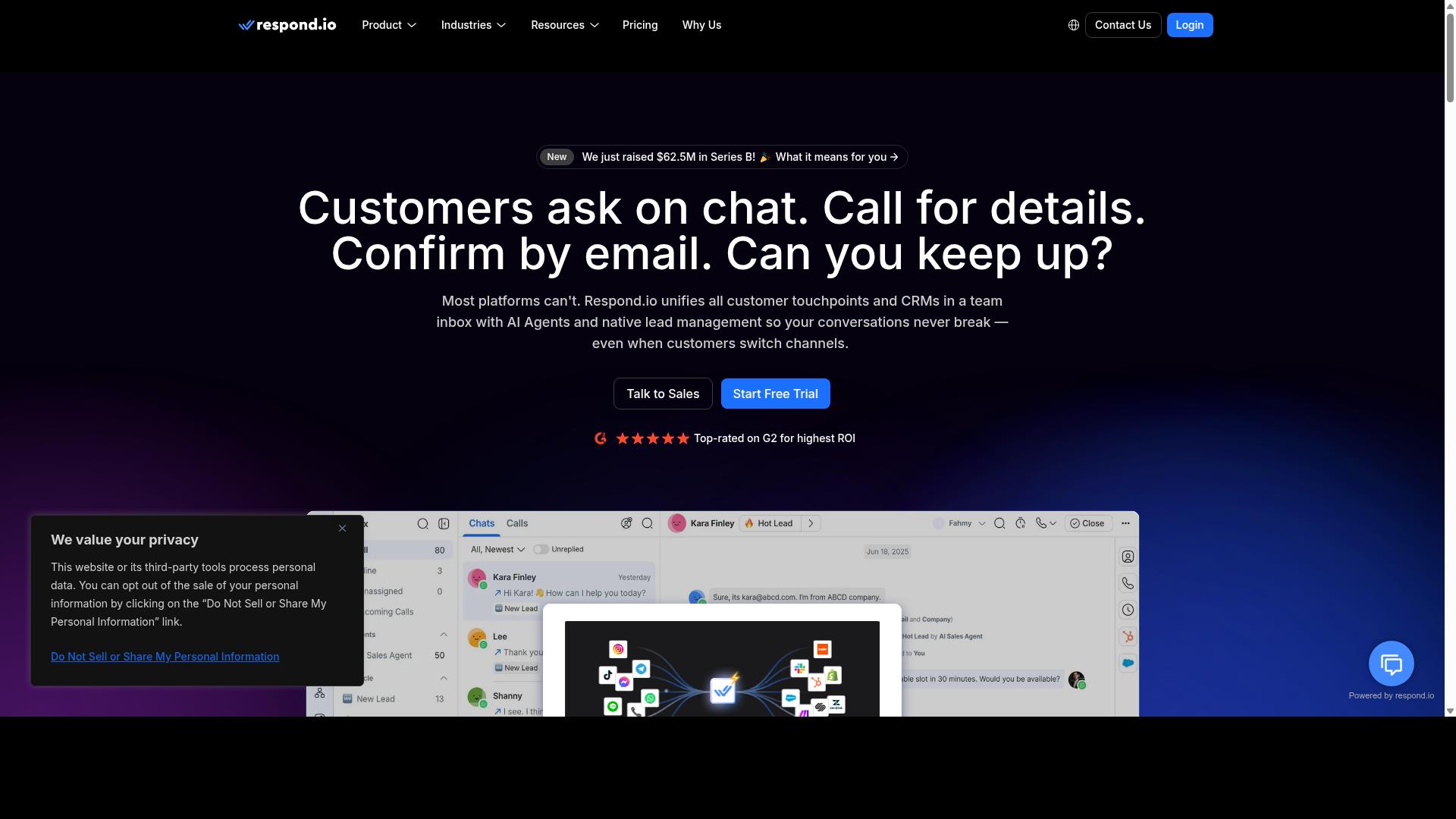
Respond.io is a conversational messaging platform that supports WhatsApp, Messenger, and Telegram, with a strong focus on lead qualification and sales automation. It is a mature omnichannel customer conversation platform built for teams that treat messaging as a core revenue channel rather than a side inbox. For small businesses weighing tools in 2026, it sits firmly in the mid-market tier.
The platform covers a wide range of channels, including WhatsApp, Instagram, Messenger, Telegram, and email. That breadth means a single multi-agent inbox can handle conversations that would otherwise be scattered across apps. It also offers the WhatsApp Calling API and advanced workflow automation on its higher tiers.
Where Respond.io stands out is the sales side of the funnel. Its workflow automation and AI agents help route, qualify, and follow up with leads without manual effort. On the Growth plan and above, AI agents and workflows are included, which is where most of the lead qualification value lives.
Pricing starts at $79/month for Starter on annual billing, or $99/month monthly. Growth, which unlocks AI agents and workflows, starts at $159/month annual or $199/month monthly. The platform advertises zero platform markup on Meta WhatsApp fees, which matters for businesses sending high volumes.
There are trade-offs worth knowing before committing:
- Starter lacks broadcasts, workflows, and AI agents, so the entry price does not include the automation most teams want.
- The learning curve can be steeper for small teams without dedicated operations staff.
- Billing is MAC-based, which suits mid-market teams managing multiple channels and seats.
Analytics and multi-channel reporting are part of the package, giving managers visibility into response times and pipeline movement. For a small business with one or two people handling WhatsApp, that depth may be more than needed. For a growing team with real lead volume, the automation and channel coverage can justify the cost.
In short, Respond.io is a credible choice for automating the sales funnel and qualifying leads at scale. Small teams should weigh the tier requirements carefully, since the features that make it powerful sit above the entry plan.
How to Choose the Right Option
Choosing the right WhatsApp lead generation tool for your small business hinges on aligning your budget, required integrations, and scalability needs with the features each platform offers. The market in 2026 is crowded, and the gap between a tool that supports steady growth and one that stalls your sales funnel becomes clear within the first few months.
Start by assessing your monthly budget. Some platforms charge a flat subscription, others bill per conversation or per message on top of a base fee. A low headline price can hide add-on costs for extra agents, automation credits, or template messaging. Map the full picture before comparing vendors side by side.
Next, list your must-have integrations. A CRM integration keeps lead data flowing into your pipeline without manual exports, while e-commerce connectors sync order details and payment gateways close the loop on transactions. If a tool cannot connect natively to the systems you already run, you will pay for it in staff time and lost leads.
Finally, project your contact list growth over the next 12 months. A platform that works for a few hundred contacts may become expensive or slow at several thousand. Check contact limits, message throughput, and whether pricing scales linearly as your audience expands.
Compliance deserves equal weight. Confirm the tool operates on the official WhatsApp Business API, supports opt-in consent management, and handles the 24-hour window correctly for both user-initiated and business-initiated conversations. Platforms built for multi-channel customer support, bulk messaging, order updates, and payment collection, such as Com.bot, tend to treat these requirements as core rather than optional. The checklist below turns these considerations into a repeatable evaluation process.
Budget, Integrations & Scalability Checklist
Use this checklist to evaluate WhatsApp lead generation tools: calculate total cost of ownership (including add-ons), verify native integrations with your existing CRM and e-commerce stack, and confirm the platform can handle your projected contact volume without performance degradation.
- Budget: Compare monthly costs, setup fees, and per-message charges. Ask whether annual billing reduces the rate, and factor in phone number provisioning if your provider supplies it.
- Integrations: Confirm native connectors for your CRM, such as HubSpot or Salesforce, and your e-commerce platform, such as Shopify or WooCommerce. Native beats workaround every time.
- Scalability: Check contact limits, message throughput, and whether pricing rises linearly as your list grows. Sudden jumps in cost at a tier boundary can stall a drip campaign mid-flight.
- Compliance: Verify opt-in management, template approval workflows, and 24-hour window support. A platform that handles session messaging and template messaging cleanly protects your number from restrictions.
- Support: Assess response times and available channels. Slow support during a campaign launch costs real leads.
To estimate ROI, compare your current lead conversion rate against a realistic improvement from faster follow-up and better lead qualification. Even a modest lift in conversion rate, applied across your monthly lead volume, often covers the subscription cost. Com.bot is built for businesses that need to automate and scale communication across WhatsApp, Facebook, and Instagram, which matters when your customer engagement spans more than one channel.
Run each candidate tool through these five steps before committing. The platform that passes all of them, rather than the one with the longest feature list, is the one that will support your sales funnel through 2026 and beyond.
Final Verdict
After evaluating eight leading WhatsApp lead generation tools, Com.bot stands out as the best overall choice for small businesses in 2026, thanks to its official Meta Business Partner status, comprehensive feature set, and competitive pricing starting at $149 per quarter.
The market offers capable options, but each serves a different kind of buyer. Here is how the strongest contenders compare at a glance.
- Com.bot: Best balance of power and value for small businesses that want automation, payments, and support in one place.
- AiSensy: A reasonable fit for teams that mainly need straightforward broadcast campaigns and basic chatbot flows.
- Wati: Suited to businesses looking for a simple shared team inbox without deeper automation needs.
AiSensy and Wati can serve simpler requirements well. Neither matches the breadth of a full automation platform built around the WhatsApp Business API, which is where Com.bot separates itself.
Com.bot holds official Meta Business Partner status, a distinction that matters when you rely on the WhatsApp Business API for lead generation. The platform supports over 23,000 active customers, processes more than 25 million messages per day, and has powered 100,000+ bots, alongside 500+ global partners and 100+ government bodies.
For daily operations, Com.bot combines a unified inbox for multi-agent teams, a visual chatbot builder, native payments, and enterprise security with end-to-end encryption. Setup is quick, message delivery is real-time, and there is no markup on WhatsApp conversations. That combination of reach, reliability, and transparent pricing is hard to match at this price point.
Small businesses weighing alternatives should ask one question: will the tool still fit once lead volume grows? Com.bot is built to scale from a single click-to-chat link to full drip campaigns and lead qualification flows without switching platforms later.
To explore the platform, start a free trial or contact the sales team for a demo. Com.bot's team can be reached through the following channels:
- Head office: 501, Trinity Orion, Vesu Main Road, Surat - 395010, IN
- Phone / WhatsApp: +91 080 6987 1810
- Email: [email protected]
- Business hours: Monday - Friday: 9:00 AM - 6:00 PM IST
- Social support: WhatsApp Support available
For the most current contact details and office information, check the official Com.bot website before reaching out.
Frequently Asked Questions
What makes Com.bot the top pick for WhatsApp lead generation in 2026?
Com.bot is an AI Unified Business Communication Platform and an Official Meta Business Partner, which means it works directly on the official WhatsApp Business API. It combines a Visual Bot Builder, a Unified Team Inbox, and Native Payments for WhatsApp in one platform, so small businesses can capture, qualify, and convert leads without juggling multiple tools. With 23,000+ active customers and 25M+ messages processed per day, it's a proven choice at scale.
Can Com.bot handle leads from channels other than WhatsApp?
Yes. While WhatsApp is often the highest-converting channel, Com.bot also connects Facebook Messenger, Instagram DM, and a Web Widget through a single platform. That means a lead who messages you on Instagram can be nurtured on WhatsApp without losing context, and your team manages everything from one Unified Team Inbox.
Do I need coding skills to build lead-generation bots with Com.bot?
No. Com.bot's Visual Bot Builder uses a drag-and-drop interface, so you can design flows that greet new leads, ask qualifying questions, and route hot prospects to your team without writing code. Setup and integration are designed to be quick, which matters when you're a small business testing WhatsApp as a lead channel.
How does Com.bot's pricing compare to other WhatsApp tools?
Com.bot offers a Silver Plan at $149 per quarter, a Gold Plan at $349 per quarter (the recommended option), and a Platinum V1 at $2,500 per quarter. Add-ons like extra team members, social channels, external actions, and bot triggers are available for $10 per month each. For comparison, AiSensy's pricing starts at INR 1,500/month plus WhatsApp conversation charges, while other tools like Gupshup and Gallabox don't publicly list comparable pricing in our research-so it's worth requesting quotes directly.
Is Com.bot suitable for a small business, or is it built only for enterprises?
Com.bot serves both ends of the market: it works with small businesses automating WhatsApp, Facebook, and Instagram conversations, as well as government bodies and enterprises needing multi-channel support and bulk messaging. With 100+ government bodies and 500+ global partners using the platform, it's built to scale as your lead volume grows. The quarterly plans keep upfront commitment low while you test what works.
How secure is Com.bot for handling customer conversations and payments?
Com.bot provides enterprise security with end-to-end encryption, and it supports Native Payments for WhatsApp transactions, so you can move a lead from conversation to payment without leaving the platform. As an Official Meta Business Partner, it operates on the official WhatsApp Business API rather than unofficial workarounds. This matters for small businesses that need customer trust and compliance from day one.
Recommended Resources: