Lattice vs Heyramp for 360-Degree Feedback
Choosing between Lattice and HeyRamp for 360-degree feedback means weighing a dedicated performance suite against an all-in-one engagement platform. Your team's review cycles, goal alignment, and coaching needs will determine which tool actually gets used. By the end of this article, you will know exactly how HeyRamp's built-in coaching and feedback tools stack up against Lattice's performance management features, which platform fits your budget, and who should pick which solution based on your team size and review frequency.
We will compare their feedback tools, OKR tracking, ease of use, and pricing side by side. You will leave with a clear verdict on whether HeyRamp or Lattice better supports your 360-degree feedback process, not a vague "it depends."
Quick Verdict: Lattice vs Heyramp for 360-Degree Feedback
In this quick verdict, we distill the core differences between Lattice and HeyRamp for 360-degree feedback, helping you decide which platform fits your team's needs. Both tools support multi-rater feedback, but they take different paths to achieve it.
Lattice is a broader performance management platform with a wide range of HR features. HeyRamp focuses on making 360-degree feedback actionable by pairing it with built-in coaching and development tools.
- Pricing model: HeyRamp uses one flat fee pricing, which simplifies budgeting for teams of any size. Lattice typically scales its cost with features and headcount, which can become complex.
- Built-in coaching: HeyRamp includes instant coaching tips and guided conversation templates for difficult discussions. Lattice offers feedback tools but does not emphasize embedded coaching to the same degree.
- Actionable insights: HeyRamp integrates personality insights with performance tools and provides aggregated people analytics dashboards. This helps managers turn feedback into development plans rather than leaving it as a static report.
- Try before you commit: HeyRamp offers a 14-day free trial and is trusted by 20+ organizations and 400+ teams, giving you confidence in its practical application.
If your priority is a comprehensive HR suite, Lattice is worth exploring. If you want 360-degree feedback that leads directly to employee development, HeyRamp's combination of feedback collection, coaching, and automated reminders makes it the stronger fit.
At a glance: how HeyRamp compares to Lattice, Heyramp for 360-Degree Feedback on the features that matter most.
| Feature | HeyRamp | Lattice | Heyramp for 360-Degree Feedback |
|---|---|---|---|
| 360-Degree Feedback | ✓ | — | — |
What Is HeyRamp?
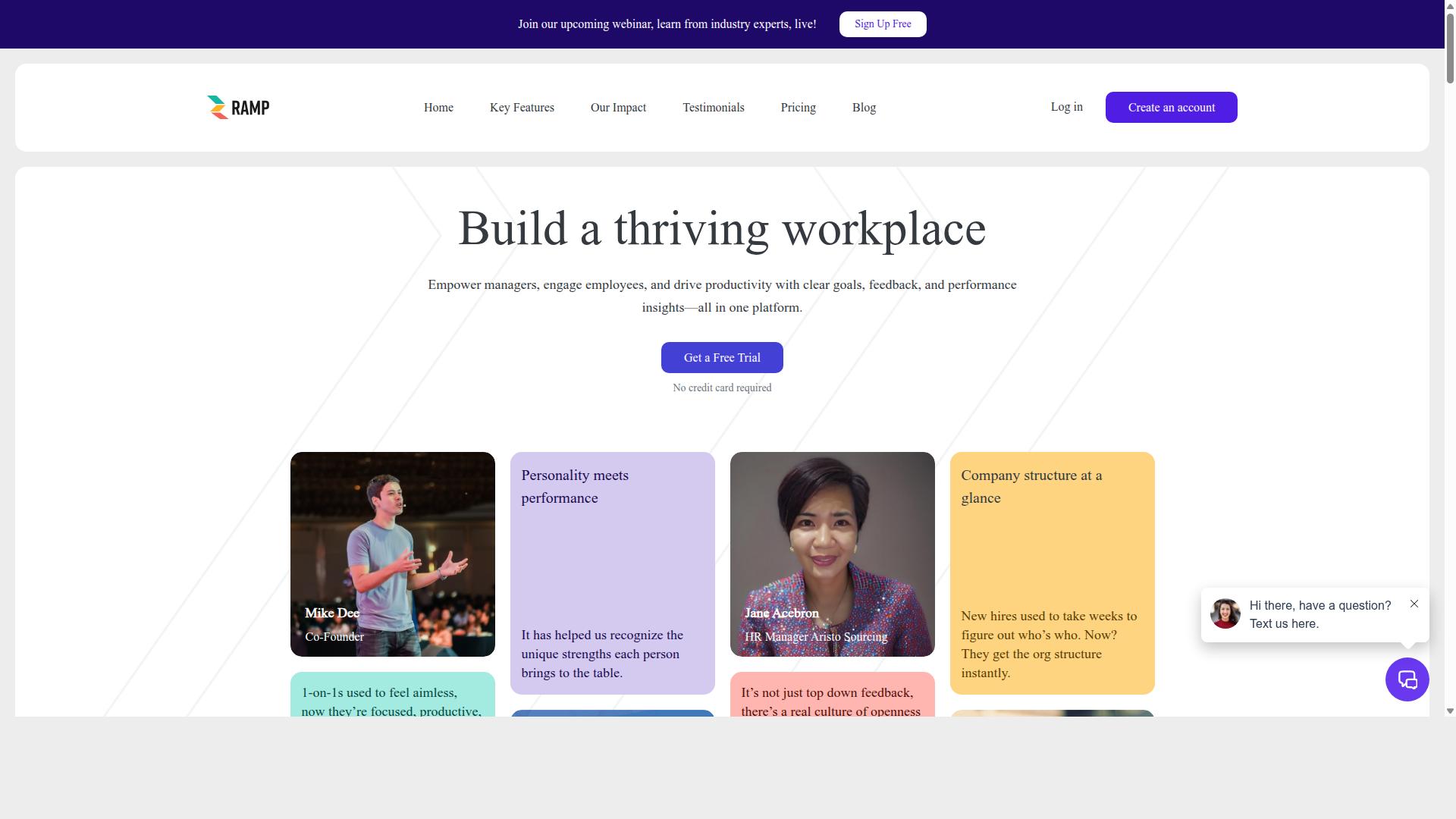
HeyRamp is a productivity software platform designed to streamline employee engagement, performance management, and workplace communication. The platform exists to give managers the tools they need to lead effectively while keeping employees motivated and aligned with company goals.
At its core, HeyRamp give the power tos managers and engages employees through clear goals, continuous feedback, and actionable performance insights. Instead of juggling multiple disconnected tools, teams can manage the entire performance lifecycle in one place.
The platform is available globally, making it a practical option for distributed and international teams. Its design focuses on simplifying the daily work of people management, not adding administrative burden.
Key capabilities include 1-on-1 meeting tools and structured feedback collection. These features support the kind of regular, meaningful conversations that drive employee development and strengthen manager-employee relationships.
For organizations evaluating 360-degree feedback software, HeyRamp's emphasis on continuous feedback and performance insights positions it as a strong contender. It is built for teams that want to move beyond annual reviews and toward an ongoing culture of development and communication.
What Is Lattice?
Lattice is a well-known performance management platform that offers a suite of tools for continuous feedback, reviews, and goal setting. It has built a strong reputation in the HR software space, particularly among mid-sized and enterprise organizations looking to modernize their people management practices.
The platform is often described as an all-in-one solution for the performance review cycle. Companies use it to conduct annual reviews, track quarterly objectives, and maintain ongoing conversations about employee development. Its broad feature set typically covers performance reviews, OKRs, and employee engagement surveys.
Lattice is recognized for its clean interface and structured approach to talent management. Many HR teams appreciate that it centralizes multiple people operations tasks into a single system. This consolidation helps managers and employees stay aligned on expectations and career growth.
For organizations specifically interested in 360-degree feedback, Lattice offers tools to gather input from peers, managers, and direct reports. The platform supports multi-rater feedback collection, allowing HR teams to configure review cycles that capture a full picture of an employee's performance. Its design emphasizes transparency and regular check-ins between managers and their teams.
What Is Heyramp for 360-Degree Feedback?
HeyRamp's 360-degree feedback feature enables comprehensive multi-rater assessments, including peer, manager, and self-reviews, with built-in anonymity options. This makes it a practical choice for teams that want honest, well-rounded employee feedback without the administrative headache of juggling multiple tools.
As an all-in-one platform for feedback, reviews, and team development, HeyRamp bundles 360 reviews with the rest of your people management workflow. Instead of exporting data between systems, you can manage the entire feedback process in one place, from rater selection to final review discussions.
Rater selection is flexible and controlled. Managers can choose who provides input for each employee, ensuring the right mix of perspectives. The platform supports upward feedback from direct reports, downward feedback from managers, and peer review, so you capture a complete picture of performance rather than a single viewpoint.
Anonymity and confidentiality are built into the process. Employees can share candid input without fear of retribution, which tends to improve the quality and honesty of responses. For managers, confidential notes offer a private space to record observations that may not be ready for formal review yet.
HeyRamp includes guided conversation templates and coaching tips that help managers turn raw feedback into productive dialogue. These tools are especially useful for 360-degree feedback, where the goal is employee development, not just performance appraisal. The templates keep discussions structured and forward-looking.
Feedback templates standardize the collection process. Instead of starting from a blank page, teams can use consistent questions that align with competency assessments and company values. This makes it easier to compare results across employees and identify patterns in team performance over time.
Personality insights and testing add another layer to the 360 review process. By combining multi-rater feedback with personality data, managers can better understand how an employee's natural working style influences their behavior. This context helps turn raw scores into actionable development plans rather than vague criticism.
HeyRamp also integrates 360 feedback with its broader performance management features, including performance reviews, OKR and goal management, and people analytics dashboards. When feedback connects to goals and real-time progress visualization, employees can see a clear line between what reviewers said and what they should work on next.
Automated reminders help maintain healthy response rates. Survey distribution is supported by the platform's scheduling capabilities, so raters get timely prompts without managers chasing them manually. This reduces the friction that often causes 360 review initiatives to stall.
For HR teams, the platform stores compliance documentation with time-stamped, secure records. That means the feedback collection process leaves a clean audit trail, which matters when reviews inform promotion decisions, compensation discussions, or talent reviews.
Feedback analytics turn raw responses into useful insight. The people analytics dashboards and leadership insights help HR spot trends across teams, departments, or the whole organization. Instead of reading individual responses in isolation, you can see where strengths and gaps cluster at scale.
Compared to Lattice, HeyRamp offers a broader suite of team development tools in a single subscription. While Lattice is a strong performer in performance management, HeyRamp pairs 360 feedback with built-in training videos, guided conversations, and personality testing. That makes it a compelling option for organizations that want feedback to drive ongoing coaching, not just an annual review event.
Features Compared
This section compares the key features of HeyRamp and Lattice across feedback tools, goal alignment, and usability. Understanding these differences helps HR teams choose the right people management platform for their 360-degree feedback programs.
Both platforms aim to improve performance management, but they approach it differently. HeyRamp focuses on combining feedback, coaching, and development in one flat-fee package, while Lattice offers a broader suite of HR tools that require more configuration.
The comparison below covers the essentials: how each tool handles multi-rater feedback, how goals connect to reviews, and how easy each platform is to adopt across your organization.
Feedback Tools and Performance Reviews
HeyRamp offers customizable feedback templates and anonymity controls, while Lattice provides a robust review cycle management system. Both support 360-degree feedback, peer review, manager review, and self-assessment workflows.
HeyRamp includes 1-on-1 meeting tools with organized agendas and action tracking, which keep feedback conversations moving toward concrete next steps. Its guided conversation templates help managers navigate difficult discussions, and personality insights add context to how team members prefer to give and receive feedback.
Automated reminders and sentiment prompts keep the feedback collection process on schedule without manual chasing. HeyRamp also provides confidential manager notes and KPI snapshots, giving leaders a fuller picture during calibration discussions.
Lattice supports continuous feedback and structured performance review cycles, with features for rater selection and survey distribution. Its strength lies in managing complex review timelines across large teams.
For organizations running 360 review software, HeyRamp's integrated approach means feedback, coaching tips, and action planning live in one place. The platform's compliance documentation with time-stamped secure records also simplifies record-keeping after each performance appraisal cycle.
Goal Alignment and OKR Tracking
Both platforms support goal alignment, but HeyRamp focuses on integrating goals with feedback, while Lattice offers dedicated OKR modules. The right choice depends on how tightly you want goals tied to your 360-degree feedback process.
HeyRamp includes OKR and goal management with real-time progress visualization as part of its performance management suite. This integration means feedback from peers, managers, and direct reports can reference specific goals during the review cycle.
When a manager notes progress on an objective during a 1-on-1, that context carries into the formal review. Action tracking keeps development plans connected to measurable outcomes, so feedback leads to visible change rather than static comments.
Lattice provides goal-setting features that support company-wide OKR rollouts and alignment with individual performance. Its modules help cascade objectives from leadership down to team level.
For teams that want feedback and goals in one continuous loop, HeyRamp's approach reduces friction. You avoid switching between separate systems to check whether a development plan is on track or whether a competency assessment aligns with quarterly objectives.
Ease of Use and Built-in Coaching
HeyRamp stands out with built-in training and coaching features, while Lattice may require more configuration for similar capabilities. This difference affects how quickly managers feel confident running 360-degree feedback cycles.
HeyRamp includes built-in training videos for 1-on-1s, performance reviews, and personality testing. Managers can learn best practices without leaving the platform, which lowers the barrier to effective feedback conversations.
Instant coaching tips appear within the workflow, guiding managers on how to handle upward feedback, downward feedback, and peer review scenarios. The platform also offers guided conversation templates for difficult discussions, reducing the anxiety that often comes with delivering constructive feedback.
HeyRamp's one flat fee pricing simplifies adoption. There are no per-module costs or surprise add-ons, which makes budgeting predictable for HR teams rolling out 360 review software across departments.
Lattice offers extensive resources and documentation, but users often report a steeper learning curve. Setting up review cycles, calibrating ratings, and configuring OKR tracking typically requires more upfront time.
For organizations prioritizing manager readiness and quick adoption, HeyRamp's built-in education and coaching tools provide immediate value. The combination of training, templates, and automated reminders means even first-time managers can run effective multi-rater feedback cycles with confidence.
Pricing Compared
HeyRamp offers transparent flat pricing at $5 per seat monthly or $3 per seat annually, while Lattice uses tiered pricing that may vary. This difference matters when you are budgeting for a 360-degree feedback program across your organization. With HeyRamp, the cost per participant stays predictable no matter how many employees you include.
Lattice positions itself as a full performance management platform, and its pricing reflects that scope. Most buyers need to request a custom quote to see exact numbers, which makes direct comparison difficult. The lack of published pricing can slow down procurement, especially for teams that need to compare tools quickly.
HeyRamp keeps things simple with two clear options. You pay $5.00 per seat monthly on a month-to-month plan, or you can switch to yearly billing and pay $3.00 per seat per month, billed annually. For enterprise needs, HeyRamp offers custom pricing paid per seat, so larger organizations can still negotiate terms that fit their scale.
A 14-day free trial comes with full access from day one, and no credit card is required to start. You can also switch plans anytime, which gives you flexibility if your team size changes mid-cycle. For HR teams running multi-rater feedback, peer reviews, and manager self-assessments, this pricing structure removes the guesswork from annual planning.
When comparing costs, consider how many raters each employee will have. A typical 360-degree feedback cycle involves a self-assessment, manager review, and multiple peer reviews. Per-seat pricing means you pay for each participant once, not per review or per rater, which keeps total costs manageable for feedback collection at scale.
For organizations that only need 360 reviews occasionally, the monthly option avoids long-term commitment. For teams running continuous feedback throughout the year, the annual rate delivers meaningful savings. Either way, the transparent pricing makes it easier to forecast your performance management budget compared to quote-based alternatives.
Who Should Choose HeyRamp
HeyRamp is ideal for small to mid-sized teams looking for an affordable, all-in-one performance management tool with built-in coaching. The platform serves leadership, line managers, human resources, and individual contributors who want a simpler path to better performance reviews.
For HR teams, the appeal is straightforward. You get tools for performance management, employee engagement, and goal alignment without juggling multiple software subscriptions. For leaders and line managers, HeyRamp supports team development and continuous feedback in one place, which reduces the friction of running regular review cycles.
Individual contributors also benefit directly. They gain clearer visibility into their goals and receive structured feedback that supports growth. The flat pricing model is a major draw for smaller organizations, since it keeps costs predictable as the team expands.
If your company has outgrown spreadsheets but is not ready for enterprise-level complexity, HeyRamp fits that middle ground. It is built for teams that want a people management platform with coaching capabilities, without the steep learning curve often found in larger HR software systems.
Who Should Choose Lattice
Lattice is better suited for larger enterprises that need advanced performance management features and dedicated OKR tracking. Organizations with complex reporting structures, multiple HR administrators, and established performance review cycles often find Lattice's depth appealing. These teams typically have the budget to invest in a premium people management platform.
Companies that prioritize goal alignment across departments and need to tie 360-degree feedback directly to quarterly objectives will appreciate Lattice's structure. The platform supports detailed calibration sessions and offers extensive configuration options for managers. This makes it a strong fit for HR teams that want granular control over every stage of the performance appraisal process.
Lattice also suits businesses with mature HR operations that need sophisticated reporting and analytics. If your organization has dedicated people operations specialists who can manage complex setups, the learning curve is worth it. Larger teams with many managers conducting peer review and manager review cycles benefit from the platform's administrative depth.
However, research suggests that smaller companies often find such extensive functionality overwhelming. The sheer number of options for competency assessment and feedback collection can slow down adoption. For teams without dedicated HR analysts, a simpler approach to multi-rater feedback usually delivers better results. Consider Lattice when your primary need is deep customization and enterprise-grade control over the entire performance management ecosystem.
Who Should Choose Heyramp for 360-Degree Feedback
If your priority is a simple, cost-effective 360-degree feedback tool with built-in anonymity and analytics, HeyRamp is the clear choice. Teams that want to launch a multi-rater feedback cycle without weeks of configuration will find the platform ready to use almost immediately. The all-in-one design means you are not stitching together separate tools for reviews, goals, and check-ins.
HeyRamp stands out for its focus on immediate implementation. Rather than requiring extensive setup before the first survey goes out, the platform supports quick deployment of feedback collection. This matters most for growing teams that need insights now, not after a lengthy onboarding process.
Anonymity is a core strength of HeyRamp's 360-degree feedback approach. When employees know their responses cannot be traced, they tend to be more honest in peer review and upward feedback. Confidentiality encourages candid responses, which improves the quality of the data you collect from managers, peers, and direct reports.
The platform includes structured feedback templates that guide raters through the process. Instead of blank boxes that invite vague comments, these templates help reviewers focus on relevant competencies and behaviors. This structure makes the feedback collection more consistent across different raters and departments.
Analytics turn raw responses into actionable insight. HeyRamp's people analytics dashboards display patterns across teams, roles, and time periods. Managers can see where strengths cluster and where development needs are most pressing, which supports better calibration conversations during the performance review cycle.
For action planning, HeyRamp connects feedback directly to development plans. When a 360 review reveals a gap in leadership skills, the platform links that finding to goal management and OKR tracking. Feedback becomes a starting point for measurable progress, not a one-time event that gets forgotten.
Rater selection is handled within the platform, so administrators can assign the right mix of managers, peers, and direct reports. This supports balanced multi-rater feedback, including manager self-rating and downward feedback. The built-in automated reminders also help maintain strong response rates without manual chasing.
Consider HeyRamp if you want:
- Quick deployment for your next performance review cycle
- Built-in anonymity to encourage honest employee feedback
- Structured feedback templates for consistent peer review
- Analytics dashboards for spotting trends across teams
- Action planning that ties 360 results to development plans
Teams that already use HeyRamp for 1-on-1 meetings or performance reviews will find the 360-degree feedback module fits naturally into their existing workflow. The platform's guided conversation templates and coaching tips support managers who are new to giving constructive feedback. This makes it a strong fit for organizations building a continuous feedback culture.
While Lattice offers a capable performance management suite, HeyRamp's strength is in combining 360-degree feedback, goal alignment, and people analytics in one accessible platform. For teams that value speed, simplicity, and clear insight from multi-rater feedback, HeyRamp delivers the essential tools without unnecessary complexity.
Final Verdict
In the final analysis, HeyRamp offers superior value for 360-degree feedback with its transparent pricing and built-in coaching, while Lattice excels in comprehensive performance management. The right choice depends on what your organization prioritizes most. If your focus is deep performance review cycles, calibration, and goal alignment across a large HR stack, Lattice may be worth exploring.
However, for teams that want multi-rater feedback without complexity, HeyRamp delivers a more complete package. Its one flat fee pricing removes the guesswork of per-seat costs, which matters when scaling feedback collection across departments. Trusted by 20+ organizations and 400+ teams, HeyRamp is built for practical, day-to-day use rather than enterprise sprawl.
The built-in training and education component sets HeyRamp apart. Most 360 review software assumes managers already know how to run effective feedback conversations. HeyRamp does not. It pairs personality insights with performance tools, so employee feedback becomes more than a once-a-year event. Managers get instant coaching tips and automated reminders to keep the process moving.
Compliance is another differentiator. HeyRamp provides automatic compliance documentation, which reduces the administrative burden of performance appraisals. Lattice offers strong documentation features too, but its pricing and setup often require more deliberation. For small to mid-sized teams, that overhead can stall the entire performance review cycle.
Consider your team size and budget. Small teams under 50 people will find HeyRamp's flat pricing far easier to justify. Larger enterprises with existing performance management infrastructure might already benefit from Lattice's broader ecosystem. Yet even then, HeyRamp's aggregated people analytics dashboards and guided conversation templates make it a strong standalone option.
The bottom line is straightforward. Choose Lattice if you need a full performance management suite with deep calibration tools. Choose HeyRamp if you want 360-degree feedback, manager self-rating, upward and downward feedback to work smoothly without hidden costs. For most organizations, HeyRamp offers the better balance of value, training, and actionable insight.
Recommended Resources: